
Osaka: The Ultimate Food Lover's Paradise and Entertainment Capital
Osaka is Japan’s third-largest city and its most energetic, famous for bold food culture, friendly people, and nonstop entertainment. Known as Japan’s Kitchen, the city celebrates street food, humor, and everyday happiness. Unlike Tokyo’s formality or Kyoto’s traditions, Osaka feels relaxed and welcoming. Skyscrapers stand beside temples, neon streets meet quiet rivers, and history blends with modern life. From Dotonbori and takoyaki to Osaka Castle and Namba nightlife, this guide helps first-time travelers explore confidently and create unforgettable memories there.
Top 10 Must-Visit Places in Osaka
Osaka packs an incredible variety of experiences into a relatively compact and easy-to-navigate city layout. Below are the 10 essential places every first-time traveler should explore to truly understand Osaka's unique character, rich history, culinary excellence, and vibrant entertainment culture. You don't need to rush through these destinations or follow a strict itinerary—simply choose the places that match your interests and enjoy discovering Osaka at your own comfortable pace.
1. Dotonbori — Osaka's Most Iconic Entertainment District
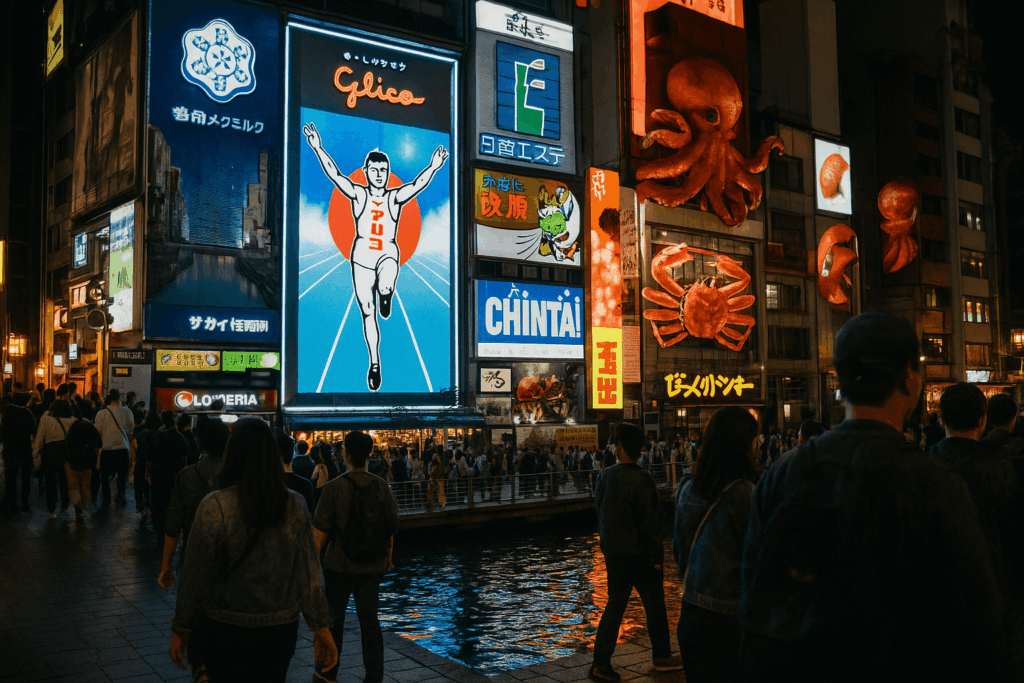
Dotonbori is the beating heart of Osaka's entertainment and food culture, featuring one of Japan's most photographed streets lined with enormous 3D billboards, animated neon signs, and the famous Glico Running Man sign. The canal-side promenade buzzes with energy day and night as crowds explore countless restaurants, street food stalls, bars, comedy theaters, and souvenir shops while the reflection of colorful lights dances on the water below creating a mesmerizing urban spectacle.
• Approx Cost: Free to explore (food and shopping vary)
• Must Try Food: Takoyaki from Kukuru, Kani Doraku crab restaurant, Ichiran Ramen
• Nearby Spot: Tombori River Walk, Hozenji Yokocho (traditional alley)
• Best Time: Evening after 6 PM for full neon light experience
• Photo Spot: Ebisubashi Bridge for the classic Glico sign view
2. Osaka Castle & Castle Park
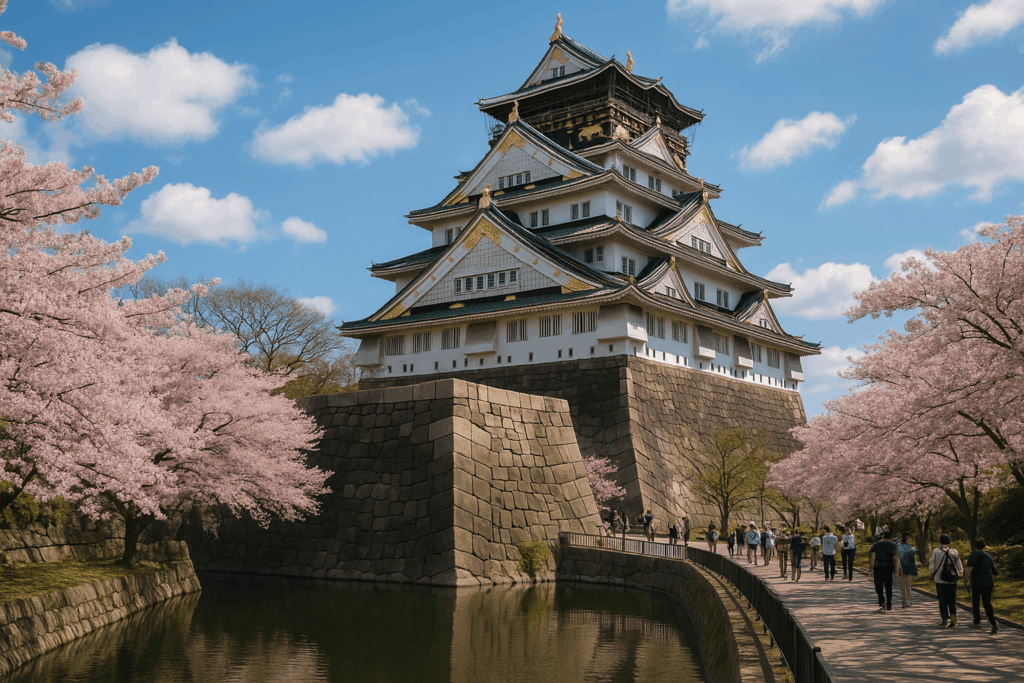
This magnificent fortress stands as one of Japan's most famous landmarks, originally built in 1583 by the legendary samurai warlord Toyotomi Hideyoshi. The impressive five-story main tower rises majestically above massive stone walls and wide moats, surrounded by expansive park grounds featuring over 600 cherry trees that create spectacular pink canopies during spring. The castle museum inside houses samurai armor, historical artifacts, detailed exhibits about feudal Japan, and an observation deck offering panoramic views of modern Osaka's sprawling cityscape.
• Ticket Price: ¥600 for castle tower interior
• Best Season: Late March to early April (cherry blossom season)
• Nearby Area: Osaka Museum of History, Osaka Business Park
• Recommended Visit Time: 1.5–2 hours including park walk
• Access: Osakajokoen Station (JR Loop Line) or Tanimachi Yonchome Station (subway)
3. Shinsekai & Tsutenkaku Tower
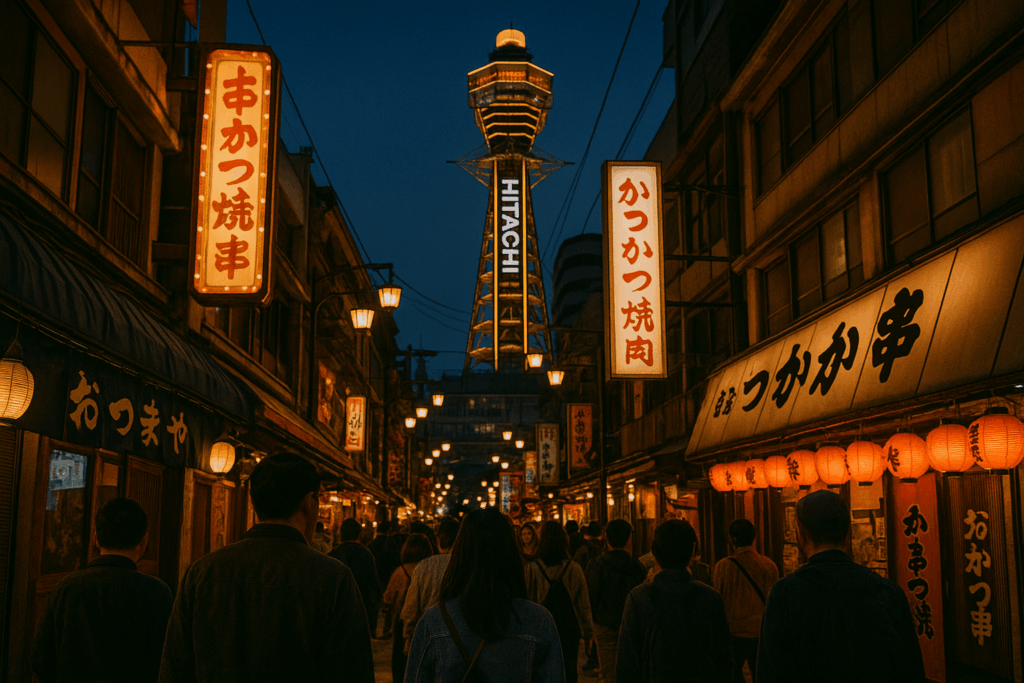
Shinsekai, meaning "New World," is Osaka's retro working-class neighborhood frozen in time with its nostalgic 1960s atmosphere, decorative archways, and the iconic Tsutenkaku Tower standing at its center. This district is famous for kushikatsu (deep-fried skewers) restaurants where the golden rule is "no double-dipping" in the communal sauce. The area's quirky charm, affordable dining, vintage pachinko parlors, and local entertainment create an authentic Osaka experience far removed from polished tourist districts.
• Tsutenkaku Tower Ticket: ¥900 for observation deck
• Must Try Food: Kushikatsu Daruma (fried skewer restaurant chain)
• Nearby Spot: Spa World (multi-floor onsen complex), Tennoji Zoo
• Local Vibe: Rough around the edges but safe and full of character
• Evening Atmosphere: Neon lights create a nostalgic retro-futuristic mood
4. Kuromon Ichiba Market — Osaka's Food Paradise
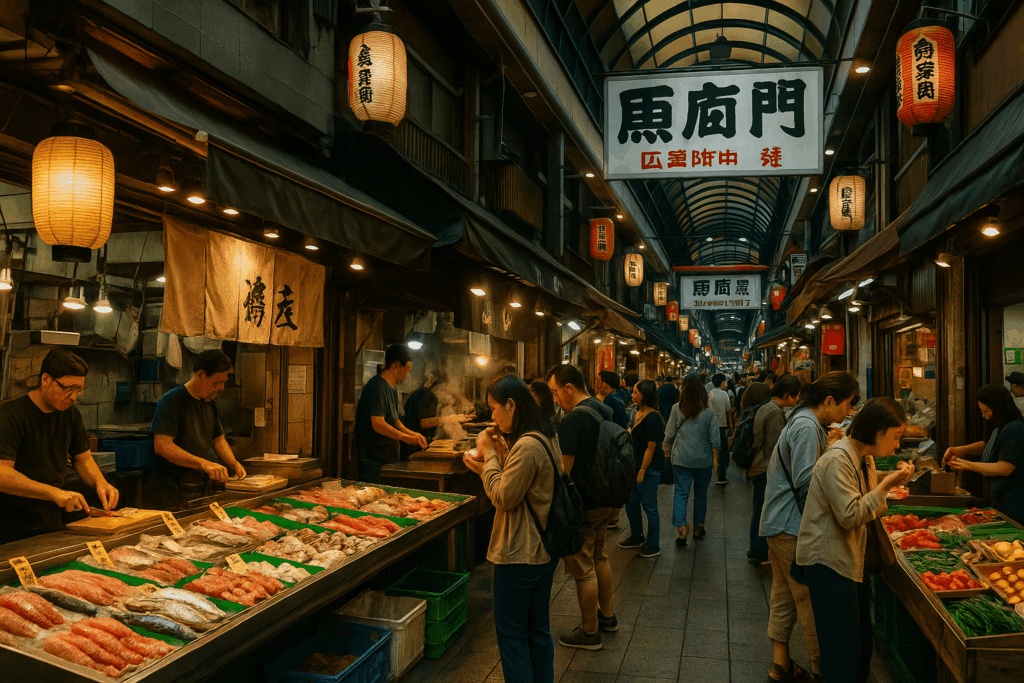
Known as "Osaka's Kitchen," Kuromon Market is a covered 600-meter shopping street packed with over 150 vendors selling fresh seafood, premium wagyu beef, seasonal fruits, traditional sweets, pickles, and ready-to-eat street food that you can enjoy while walking through the vibrant market atmosphere. This is where professional chefs and local families shop for ingredients, making it an authentic glimpse into Osaka's serious food culture rather than a manufactured tourist attraction.
• Approx Cost: ¥500–¥3,000 depending on how much you eat
• Must Try Food: Fresh tuna sashimi, grilled scallops, wagyu beef skewers, fugu (blowfish), tamagoyaki
• Nearby Spot: Namba, Dotonbori (10-minute walk)
• Best Time: Morning 9–11 AM for freshest selection
• Tips: Many stalls accept credit cards now, but cash is still preferred
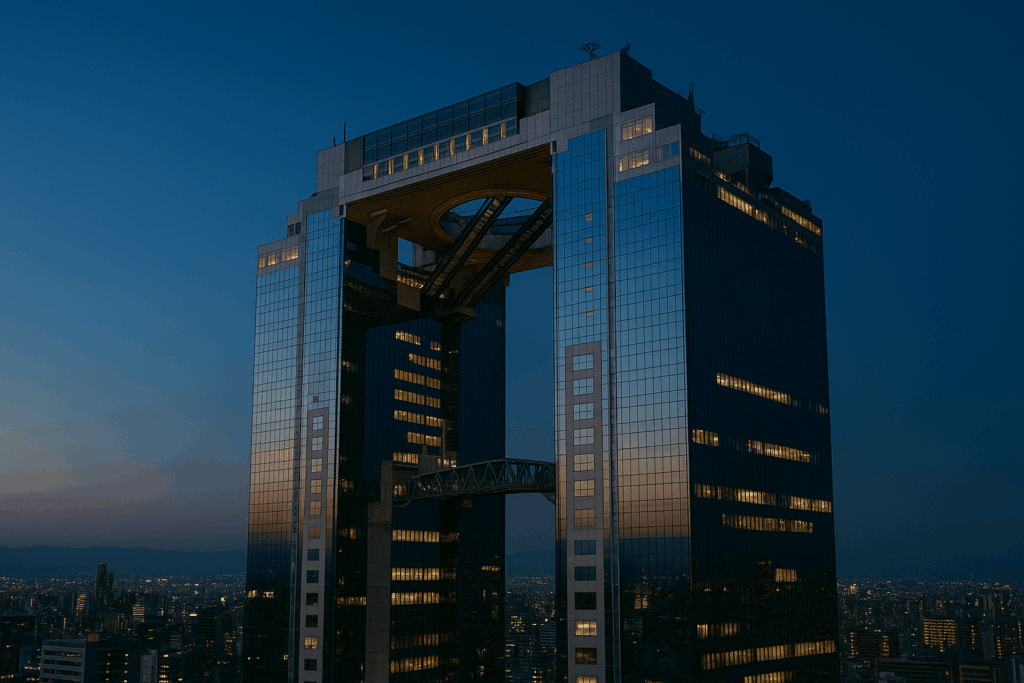
5. Umeda Sky Building — Futuristic Architecture & City Views
This architectural masterpiece consists of two 40-story towers connected at the top by a spectacular "Floating Garden Observatory" that appears to hover in the sky. The 360-degree open-air rooftop deck provides breathtaking panoramic views of Osaka's sprawling urban landscape, Osaka Bay, and distant mountains. The building's futuristic design, illuminated escalators suspended in the air, and romantic atmosphere make it especially popular during sunset and evening hours when the city lights begin twinkling below.
• Ticket Price: ¥1,500 for observatory
• Best Time: Sunset (around 5–6 PM depending on season)
• Nearby Area: Umeda shopping district, Osaka Station City
• Romantic Spot: Popular for couples and proposals
• Access: 10-minute walk from Osaka/Umeda Station
6. Sumiyoshi Taisha — Ancient Shinto Shrine
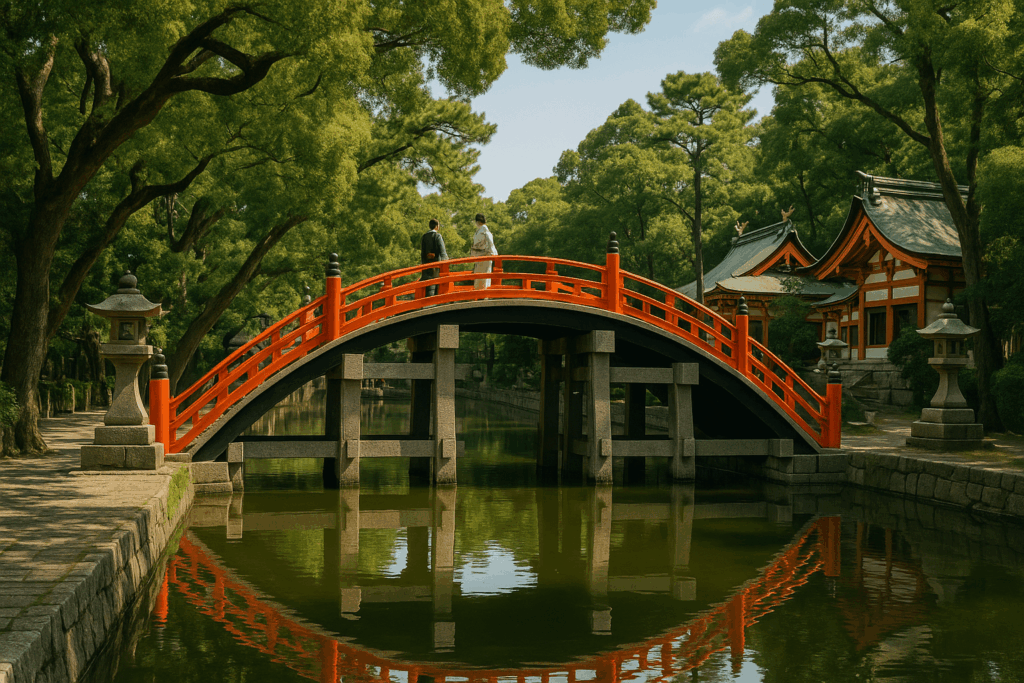
One of Japan's oldest Shinto shrines, established in the 3rd century, Sumiyoshi Taisha features unique architectural style predating Buddhist influence on Japanese design. The iconic arched Sorihashi Bridge (also called the "drum bridge" for its steep curved shape) leads to the main shrine complex surrounded by ancient trees, stone lanterns, and peaceful gardens. The shrine remains an important spiritual site where locals come to pray for safe ocean travel, business success, and poetry inspiration.
• Approx Cost: Free entry
• Must See: Sorihashi Bridge, main hall architecture, stone lanterns
• Nearby Spot: Sumiyoshi Park
• Cultural Experience: Traditional wedding ceremonies often held on weekends
• Best Photo Time: Early morning for peaceful atmosphere and soft lighting
7. Namba & Shinsaibashi Shopping District
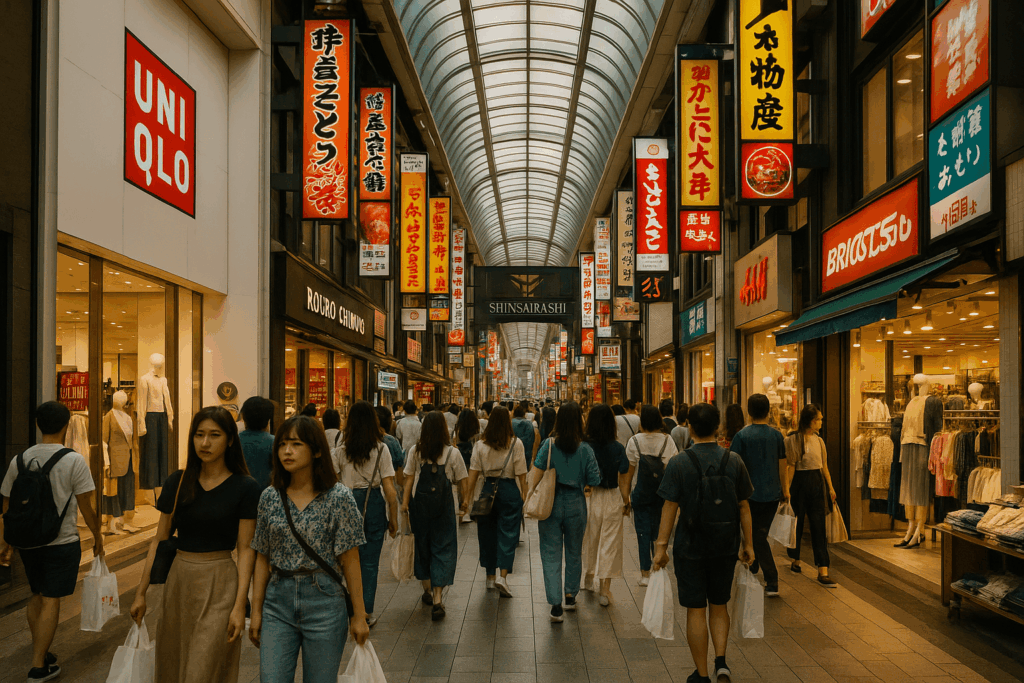
This interconnected shopping paradise stretches over 2 kilometers featuring everything from luxury international brands to quirky independent boutiques, massive department stores to tiny specialty shops selling anime goods, fashion, cosmetics, electronics, and souvenirs. The covered Shinsaibashi-suji shopping arcade protects shoppers from weather while Amerikamura (America Village) nearby offers street fashion, vintage clothing, and youth culture. The entire area buzzes with energy from morning until late night making it perfect for shopping marathons and people-watching.
• Approx Cost: Free to explore (shopping budget varies greatly)
• Must Visit: Shinsaibashi-suji arcade, Daimaru department store, Amerikamura
• Nearby Food: Countless restaurants, cafés, and street food options
• Shopping Tip: Tax-free shopping available for tourists with passport
• Evening Activity: Transforms into nightlife district with bars and clubs
8. Osaka Aquarium Kaiyukan — World-Class Marine Life Experience
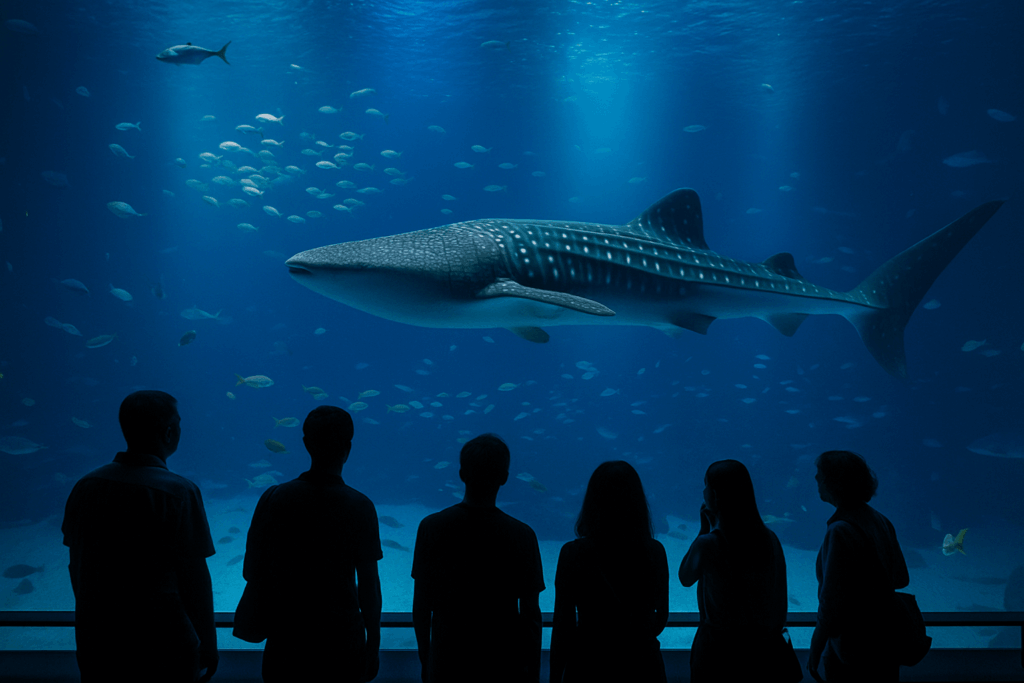
One of the world's largest and most impressive aquariums, Kaiyukan takes visitors on a journey through the Pacific Rim's diverse marine environments via a spiraling pathway that descends through 15 tanks representing different regions. The massive central tank houses whale sharks, manta rays, and countless fish species swimming together in a mesmerizing aquatic ballet. Interactive touch pools, penguin exhibits, jellyfish displays, and the stunning otter habitat make this a perfect destination for families, couples, and anyone fascinated by ocean life.
• Ticket Price: ¥2,700 (adults), ¥1,400 (children 7-15)
• Recommended Visit Time: 2–3 hours
• Must See: Whale shark tank, Pacific Ocean zone, jellyfish gallery
• Nearby Area: Tempozan Harbor Village, Tempozan Ferris Wheel
• Access: Osakako Station (Chuo Line subway)
9. Osaka Museum of Housing and Living — Time Travel Experience
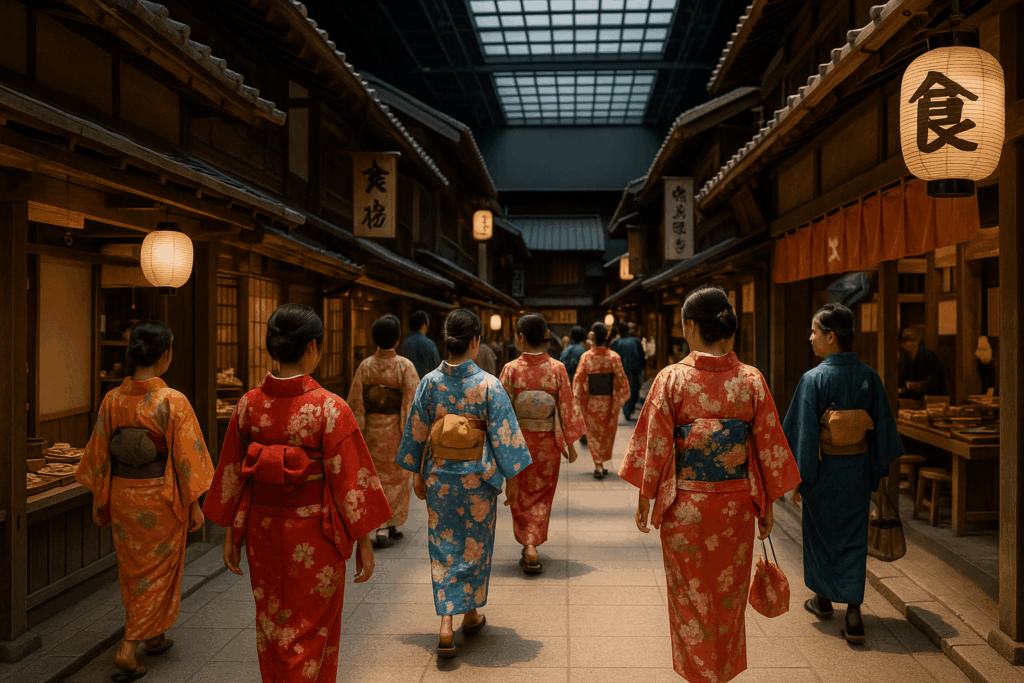
This unique museum recreates life in Osaka during the Edo period (1830s) with full-scale reproductions of streets, houses, shops, and theaters that visitors can walk through and explore. You can rent traditional kimono or yukata to wear while strolling through the recreated townscape, complete with sound effects, changing artificial sky showing different times of day, and interactive exhibits explaining daily life, commerce, and culture of historical Osaka. It's an immersive educational experience that brings history to life in an engaging and photogenic way.
• Ticket Price: ¥600 (adults), kimono rental +¥500
• Recommended Visit Time: 1–1.5 hours
• Photo Opportunity: Wearing kimono in Edo-period street settings
• Best For: History enthusiasts, families, Instagram-worthy photos
• Access: Tenjimbashisuji Rokuchome Station (directly connected)
10. Hozenji Yokocho — Hidden Traditional Alley
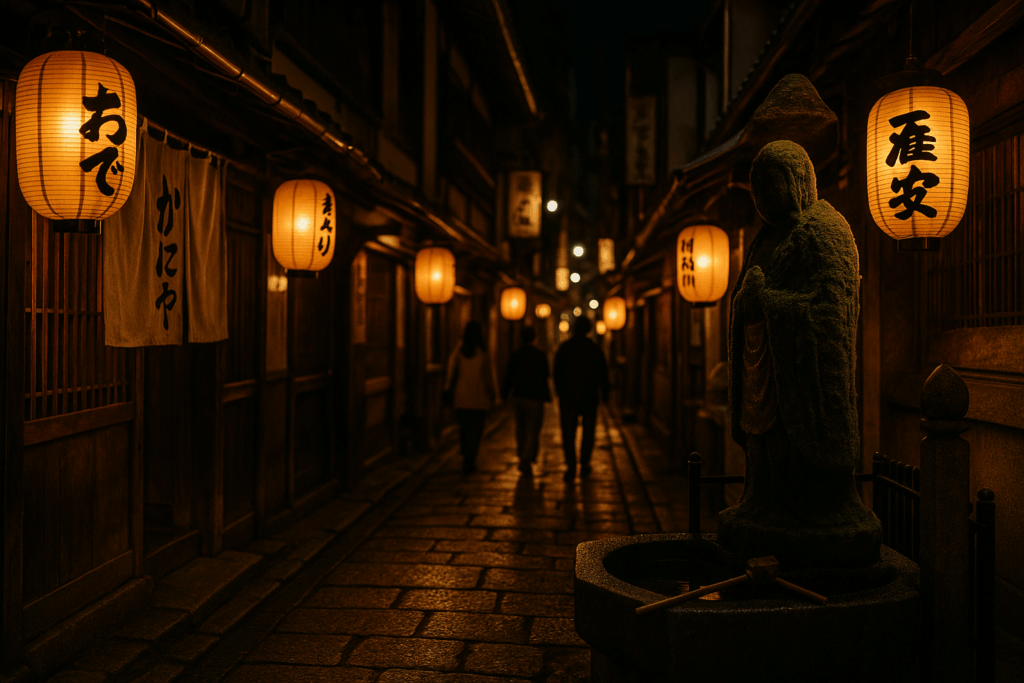
This narrow stone-paved alley hidden behind Dotonbori's chaos offers a complete contrast—a peaceful atmospheric lane lined with traditional lanterns, small intimate restaurants, and the moss-covered Hozenji Temple statue where visitors pour water for good luck. The alley's preserved traditional architecture, intimate izakayas serving local specialties, and quiet romantic atmosphere make it feel like stepping into old Osaka. It's especially magical in the evening when lantern light creates mysterious shadows and the sounds of modern Namba fade into the background.
• Approx Cost: Free to walk through, restaurant meals ¥2,000–¥5,000
• Must See: Moss-covered Fudo Myoo statue at Hozenji Temple
• Nearby: Directly accessible from Dotonbori (1-minute walk)
• Best Atmosphere: Evening after 6 PM when lanterns are lit
• Dining Tip: Small traditional restaurants require reservations
How to Travel Around Osaka Efficiently
Osaka boasts one of Japan's most user-friendly, efficient, and affordable public transportation networks, making it incredibly easy for first-time visitors to navigate independently with confidence. The city's compact urban core means most major tourist destinations are within 15–30 minutes of each other by train or subway, and the logical grid-like layout of transportation lines eliminates much of the confusion found in larger cities like Tokyo. Understanding Osaka's various transport options, fare systems, and local tips will significantly enhance your travel experience, save valuable time and money, and allow you to explore both famous attractions and hidden neighborhoods with ease and flexibility.
Best Transport Options
Osaka Metro (Subway): The backbone of city transportation with 9 color-coded lines connecting all major districts including Umeda, Namba, Tennoji, Osaka Bay area, and residential neighborhoods. Trains run frequently from 5 AM to midnight with clear English signage and announcements.
JR Loop Line (Osaka Kanjo-sen): The circular orange line connects major stations including Osaka Station, Kyobashi, Tsuruhashi, Tennoji, and Nishikuji-jo, making a complete loop around central Osaka in about 40 minutes. Perfect for sightseeing and connecting to other JR lines.
Hankyu & Keihan Railways: Private railway lines connecting Osaka with Kyoto, Kobe, and northern suburbs, often cheaper and faster than JR for certain routes.
Osaka City Bus: Useful for reaching areas not directly served by trains, though generally slower due to traffic. Most tourists rely primarily on trains and subways.
IC Cards (ICOCA, Suica, Pasmo): Rechargeable contactless cards that work on all trains, subways, buses, and even many convenience stores and vending machines throughout Osaka and all of Japan.
Approximate Transportation Costs
• Single Subway/Train Ride: ¥180–¥400 depending on distance
• Osaka Amazing Pass (1-Day): ¥2,800 (unlimited subway/bus + free entry to 40+ attractions)
• Osaka Amazing Pass (2-Day): ¥3,600
• Osaka Metro 1-Day Pass: ¥820 (unlimited subway only, no attractions)
• JR Loop Line Single Ride: ¥160–¥220
• Airport Transport (Namba to Kansai Airport): ¥1,150 by Nankai Rapi:t Limited Express
Essential Travel Tips
• Get an IC Card Immediately: Purchase an ICOCA card at any JR station ticket machine or Kansai Airport—it eliminates the hassle of buying individual tickets and works everywhere in Japan.
• Consider the Osaka Amazing Pass: If you plan to visit multiple attractions in one or two days, this pass offers incredible value with unlimited transport plus free admission to popular sites like Osaka Castle, Tsutenkaku Tower, and various museums.
• Avoid Rush Hours: Trains become uncomfortably crowded during morning rush (7:30–9:00 AM) and evening rush (5:30–7:30 PM) on weekdays, especially on major lines like the Midosuji Line.
• Use Navigation Apps: Google Maps works perfectly in Osaka for real-time train schedules, platform numbers, and walking directions—download offline maps just in case.
• Stand on the Right: Osaka follows the "stand right, walk left" escalator rule, opposite to Tokyo's convention—locals are serious about this unwritten rule.
• Station Exits Matter: Major stations like Umeda/Osaka Station have 20+ exits—check which exit number is closest to your destination to avoid unnecessary walking.
• Last Train Timing: Subways and trains stop running around midnight, so plan your return journey if enjoying nightlife, or budget for taxi fare (¥2,000–¥5,000 depending on distance).
• Weekend Travel Cards: Osaka Metro offers special weekend/holiday passes at discounted rates—check ticket machines for current promotions.
Food & Restaurant Suggestions in Osaka
Osaka is known as Japan’s Kitchen, famous for bold flavors, street food, and the local “kuidaore” culture—eat until you drop. The city focuses on tasty, filling comfort food over fancy presentation and welcomes all food lovers.
Must-Try Osaka Specialties You Cannot Miss
Takoyaki (Octopus Balls): Osaka's most iconic street food—savory battered balls filled with tender octopus pieces, tempura scraps, pickled ginger, and green onion, cooked in special molded pans until crispy outside and creamy inside, then topped with takoyaki sauce, Japanese mayonnaise, bonito flakes, and seaweed powder. Every neighborhood has competing takoyaki stands, each claiming to be the best.
Okonomiyaki (Savory Pancake): Osaka-style okonomiyaki mixes all ingredients (cabbage, batter, meat, seafood) together before cooking on a teppan griddle, creating a fluffy texture quite different from Hiroshima's layered version. Many restaurants let you cook your own at your table for an interactive dining experience.
Kushikatsu (Deep-Fried Skewers): Bite-sized pieces of meat, seafood, vegetables, and even cheese coated in panko breadcrumbs and deep-fried to golden perfection, served with communal dipping sauce following the strict rule: "no double-dipping!" Popular in Shinsekai district.
Kitsune Udon: Thick wheat noodles in hot dashi broth topped with sweet fried tofu pouches—a simple comfort food that originated in Osaka and remains a local favorite.
Ikayaki (Grilled Squid Pancake): Whole squid chopped and mixed into flour batter, grilled flat until crispy and served folded with sauce—a popular festival and street food.
Doteyaki: Beef tendons slow-cooked in sweet miso sauce until incredibly tender—a traditional Osaka specialty often served at standing bars.
Osaka Sushi (Hakozushi/Oshizushi): Pressed sushi made by layering fish and rice in wooden molds, creating distinctive rectangular shapes with more vinegar and salt than Tokyo-style nigiri.
Budget-Friendly Restaurants (¥500–¥1,500 per meal)
Kani Doraku for crab, Zuboraya for fugu, Ajinoya for home-style Japanese food, Ganso Daruma (main store), and Hariju for premium okonomiyaki.
Vegetarian & Vegan Options
Paprika Shokudo: Fully vegan restaurant serving Japanese-style set meals, curry, and seasonal vegetable dishes in Kitahama area.
Vegetarian Dining Saishokukenbi: Buddhist temple cuisine (shojin ryori) using no animal products—peaceful atmosphere and beautiful presentations.
Indian Restaurants: Numerous Indian restaurants throughout Osaka offer extensive vegetarian and vegan menus including Ganesha and Maharaja.
Soy Milk Ramen Shops: Several ramen shops now offer rich soy milk-based broths as alternatives to pork bone or chicken broths.
Approximate Budget for a Day in Osaka
Understanding expenses ensures stress-free travel in Osaka. More affordable than Tokyo, the city offers great value with amazing food, efficient transport, and quality experiences. Here’s a simple breakdown of daily costs for all travel styles.
Daily Budget Breakdown
Food & Dining: ¥1,500–¥6,000
• Breakfast: ¥400–¥1,000 (convenience store, hotel buffet, or café)
• Lunch: ¥800–¥2,000 (casual restaurants, ramen, curry, okonomiyaki)
• Dinner: ¥1,500–¥4,000 (izakaya, specialty restaurants, or street food crawl)
• Snacks & Street Food: ¥500–¥1,500 (takoyaki, ice cream, drinks, market foods)
• Drinks: ¥300–¥800 (vending machines, cafés, or convenience stores)
Transportation: ¥600–¥1,500
• Subway/Train rides: ¥400–¥1,000 (3-5 trips around the city)
• Osaka Amazing Pass option: ¥2,800 for 1-day unlimited + attractions
• Standard Metro Day Pass: ¥820 (unlimited subway only)
• IC Card top-up: ¥1,000–¥2,000 recommended amount for flexibility
Attractions & Activities: ¥0–¥5,000
• Osaka Castle: ¥600
• Umeda Sky Building: ¥1,500
• Osaka Aquarium: ¥2,700
• Tsutenkaku Tower: ¥900
• Many free attractions: Dotonbori, Hozenji Temple, Sumiyoshi Taisha, window shopping districts
• Museum of Housing: ¥600 (+ ¥500 for kimono rental)
Shopping & Souvenirs: ¥1,000–¥10,000+ (Highly Variable)
• Small souvenirs and snacks: ¥500–¥2,000
• Clothing and fashion items: ¥3,000–¥10,000
• Electronics and luxury goods: ¥10,000+
• Drugstore shopping (cosmetics, snacks): ¥2,000–¥5,000
Entertainment & Nightlife: ¥0–¥8,000 (Optional)
• Bar hopping in Namba: ¥2,000–¥5,000
• Karaoke session: ¥1,500–¥3,000 for 2 hours
• Live music or comedy shows: ¥2,000–¥4,000
Money-Saving Tips
Osaka Amazing Pass: If visiting 3+ paid attractions, this pass pays for itself while including unlimited transport—excellent value for sightseeing-heavy days.
Lunch Specials: Many restaurants offer lunch sets (teishoku) at 30-50% less than dinner prices for identical or similar food quality.
Convenience Store Strategy: Breakfast and snacks from 7-Eleven, FamilyMart, or Lawson saves significant money without sacrificing quality or variety.
Free Attractions: Dotonbori, Kuromon Market browsing, Sumiyoshi Taisha, Hozenji Yokocho, and window shopping in Shinsaibashi cost nothing but provide authentic Osaka experiences.
Happy Hour Deals: Many bars and izakayas offer special pricing 5-7 PM including discounted drinks and food.
Cash Back Options: Use IC cards at convenience stores for small cash-back amounts when purchasing items, avoiding ATM fees.
Tax-Free Shopping: Show your passport at major stores for tax-free purchases (usually 8-10% savings on purchases over ¥5,000).
Eat Like Locals: Standing bars (tachinomi) and small neighborhood restaurants offer better value and authenticity than tourist-district establishments.
Osaka rewards travelers with incredible experiences, delicious food, friendly people, and memorable moments regardless of budget level. Whether you're carefully counting yen or splurging without limits, the city welcomes everyone to enjoy its unique culture, vibrant energy, and legendary hospitality that has made it one of Japan's most beloved destinations for both international visitors and domestic travelers seeking authentic Japanese experiences away from Tokyo's intensity.