
Nagasaki: Port City of History, Night Views & Multicultural Food
Nagasaki is a scenic, hillside port city located in Kyushu, famous for its tragic atomic history, international trading past, beautiful night views, and unique food culture. Unlike other major Japanese cities, Nagasaki developed with strong Chinese, Dutch, and Portuguese influences, which are still visible today in its architecture, churches, street food, and traditions. With historic districts, peaceful parks, mountain viewpoints, and nostalgic tram rides, Nagasaki offers a deep cultural experience in a compact, walkable setting.
Top 10 Must-Visit Places in Nagasaki
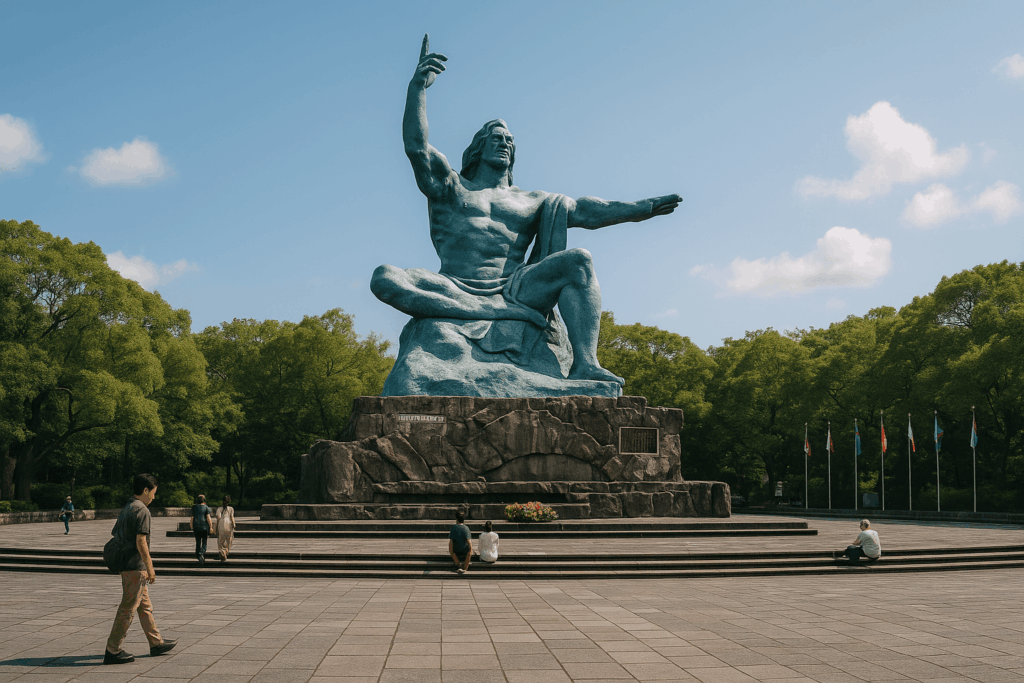
1. Peace Park & Nagasaki Atomic Bomb Museum — Heart of Modern History
This area stands at the emotional core of Nagasaki and represents the city’s message of peace to the world. Peace Park is built near the atomic bomb hypocenter and features the massive Peace Statue along with fountains and memorials donated by different countries. The Atomic Bomb Museum nearby explains the events of August 9, 1945, with survivor stories, photographs, and destroyed artifacts.
• Peace Park Cost: Free
• Atomic Bomb Museum Ticket: ¥200 (adults)
• Recommended Visit Time: 2–3 hours
• Best Time: Daytime when you are emotionally fresh
• Access: Tram Line 1 or 3 to Atomic Bomb Museum or Peace Park stops
• Travel Tip: Visit this early in the day before sightseeing fatigue sets in
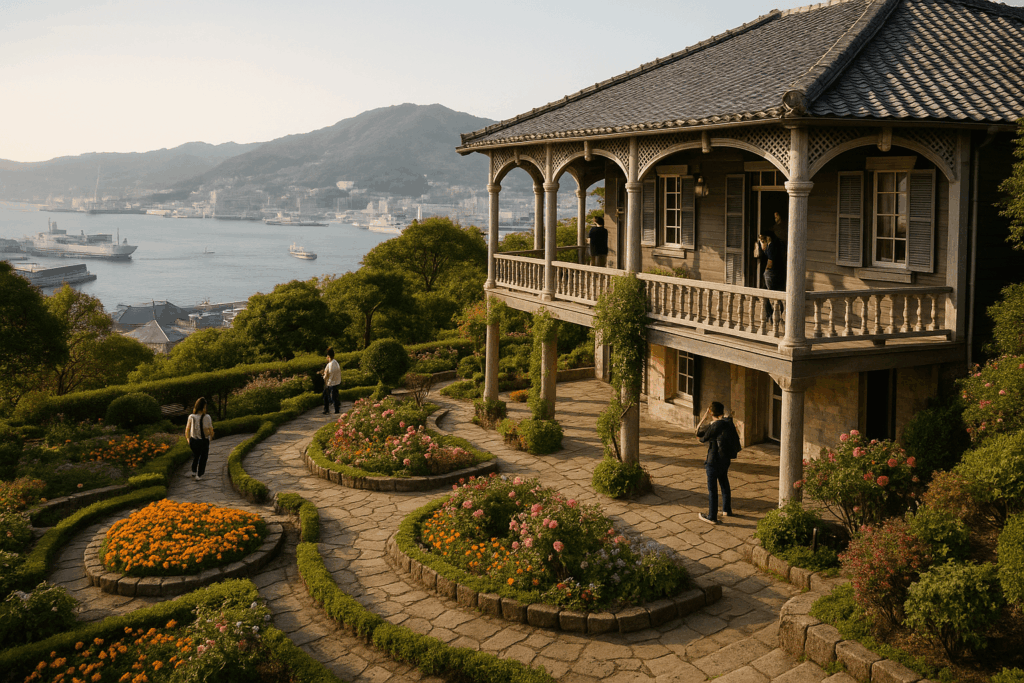
2. Glover Garden & Oura Church — Western Heritage on the Hillside
Located on Minami-Yamate Hill overlooking the harbor, Glover Garden is an open-air museum featuring preserved Western-style houses from the late 1800s, including Japan’s oldest surviving Western residence. Right beside it stands Oura Church, Japan’s oldest Catholic church and a National Treasure, connected to the history of hidden Christians.
• Glover Garden Ticket: ¥620 (adults)
• Oura Church Entry: Separate fee (varies seasonally)
• Recommended Visit Time: 1.5–2 hours
• Best Time: Late afternoon for soft harbor lighting
• Access: Tram to Ouratenshudo-shita stop + short uphill walk
• Photo Spot: Harbor-view veranda at Glover House
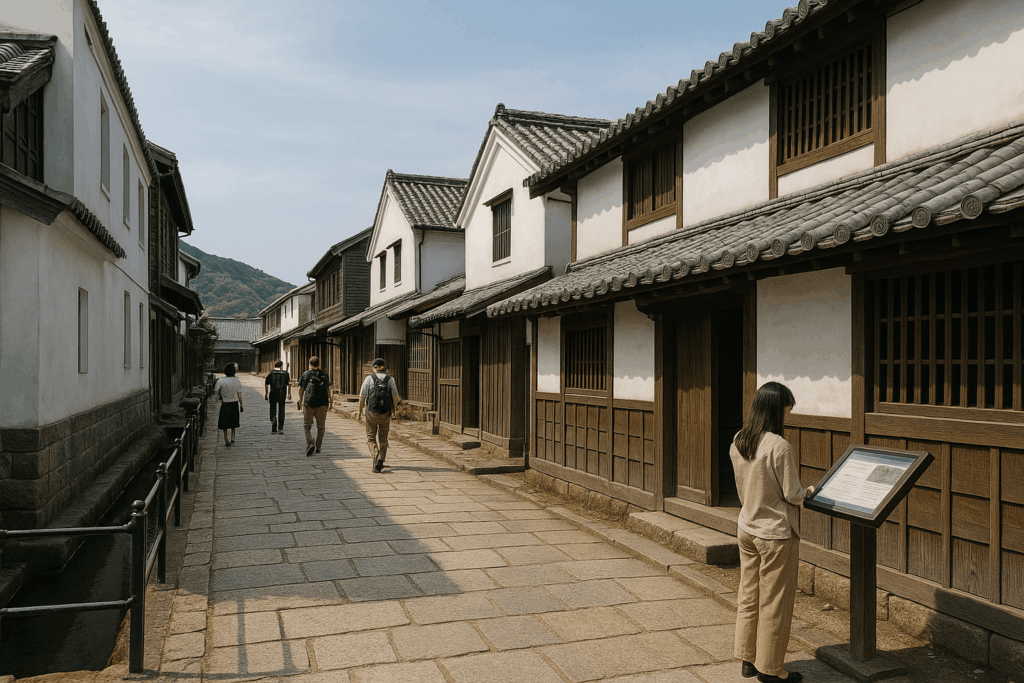
3. Dejima — Japan’s Window to Europe
Dejima was a small man-made island used during the Edo period as Japan’s only official point of contact with Europe. Today it has been fully reconstructed with warehouses, Dutch residences, and historic streets. Visitors can walk through exhibitions explaining how Western medicine, science, and culture entered Japan.
• Ticket Price: ¥520 (approx.)
• Recommended Visit Time: 1–1.5 hours
• Best For: History lovers and cultural travelers
• Access: Tram to Dejima stop
• Nearby Area: Chinatown, Hamano-machi shopping arcade
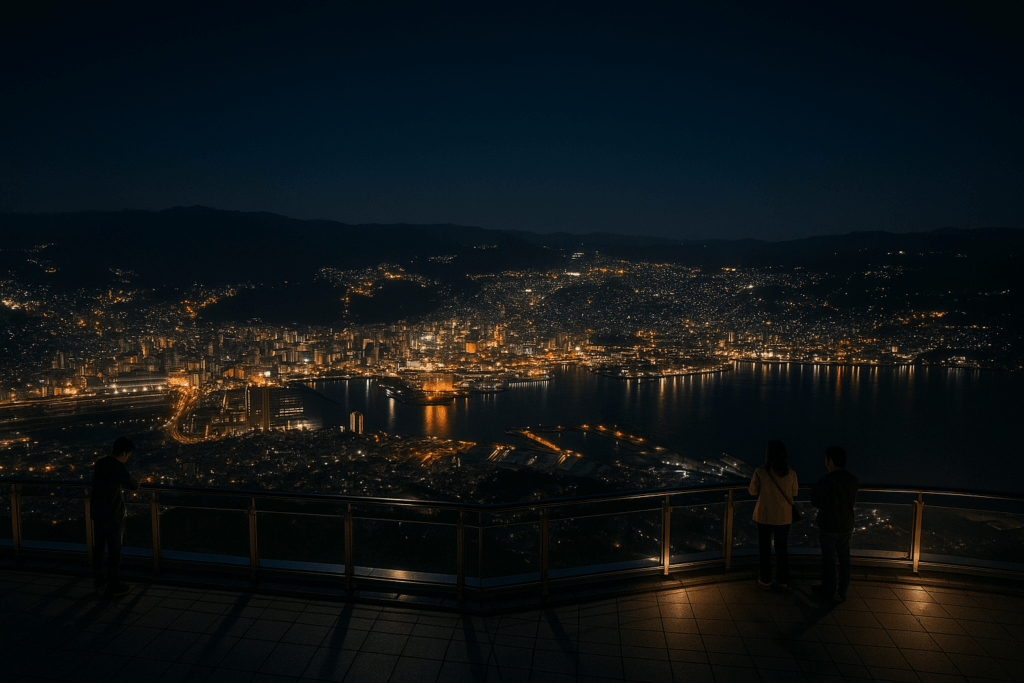
4. Mt. Inasa (Inasayama) — One of Japan’s Best Night Views
Mt. Inasa offers one of Japan’s top three night views. From the observatory, the entire harbor curves below with sparkling city lights climbing the hills. The ropeway ride itself is a memorable experience, especially at sunset.
• Ropeway Round-Trip: ¥1,250 (adults)
• Operating Hours: Roughly 9:00 AM – 10:00 PM
• Recommended Time: Sunset into full night
• Access: Tram to Takaramachi or bus to ropeway base
• Travel Tip: Carry light jacket—winds are strong at the top
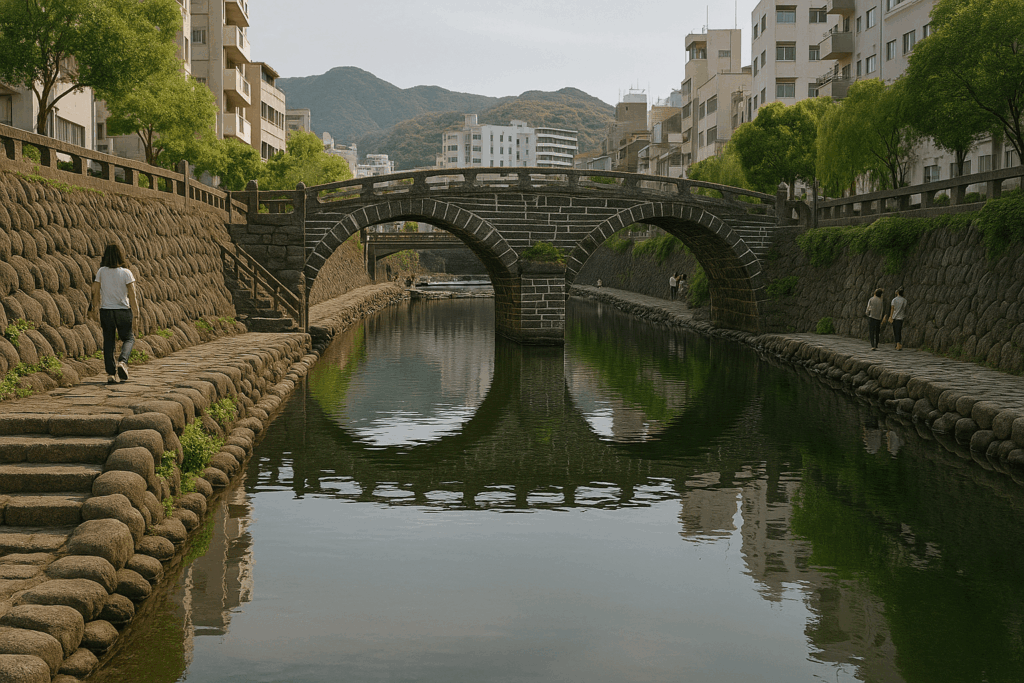
5. Meganebashi (Spectacles Bridge) & Nakashima River Walk
Built in 1634, Meganebashi is Japan’s oldest stone arch bridge. Its reflection in calm river water forms the shape of eyeglasses, giving it the name “Spectacles Bridge.” The riverside paths nearby are peaceful for strolling and photography.
• Entry Cost: Free
• Recommended Visit Time: 30–60 minutes
• Best Time: Daytime or early evening
• Access: Tram to Nigiwaibashi stop
• Photo Tip: Stand directly at water level for perfect reflection
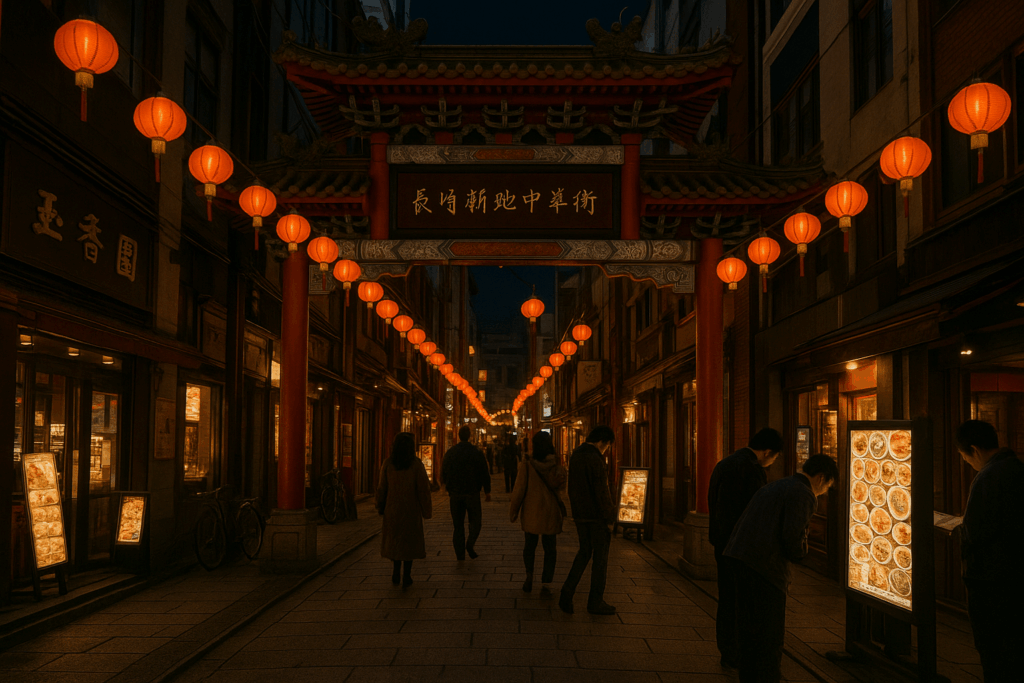
6. Nagasaki Chinatown (Shinchi) & Hamano-machi Shopping Arcade
Nagasaki’s Chinatown is one of Japan’s three main Chinatowns and the birthplace of the famous champon noodles. Lanterns, colorful gates, and Chinese-style restaurants fill the narrow streets. Right next to it, Hamano-machi is the main shopping arcade for local fashion and cafés.
• Approx Cost: ¥800–¥2,000 per meal
• Recommended Visit Time: 1–2 hours
• Best Time: Lunch or evening for atmosphere
• Access: Tram to Shinchi-chukagai stop
• Must-Try Food: Nagasaki champon, sara udon
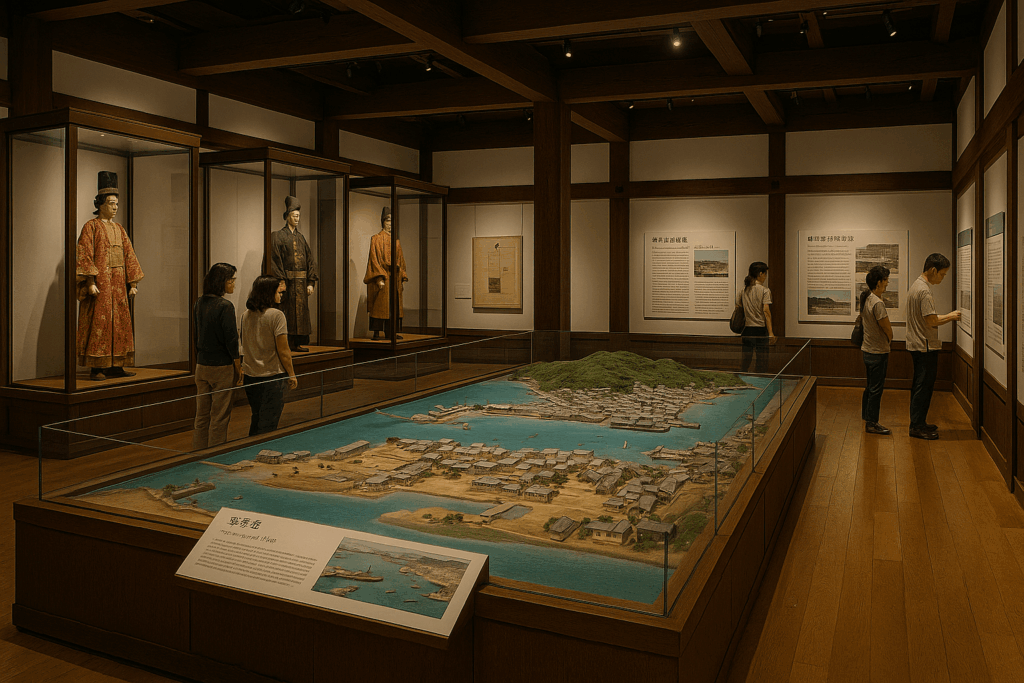
7. Nagasaki Museum of History and Culture — Trading Port Legacy
This museum explains Nagasaki’s development as Japan’s gateway to the outside world. Exhibits cover European trade, local festivals, and daily life. A reconstructed magistrate’s office lets visitors explore traditional government rooms.
• Ticket Price: ¥630 (adults), ¥310 (students)
• Recommended Visit Time: 1–1.5 hours
• Best For: Cultural and historical understanding
• Access: 5-minute walk from Sakura-machi tram stop
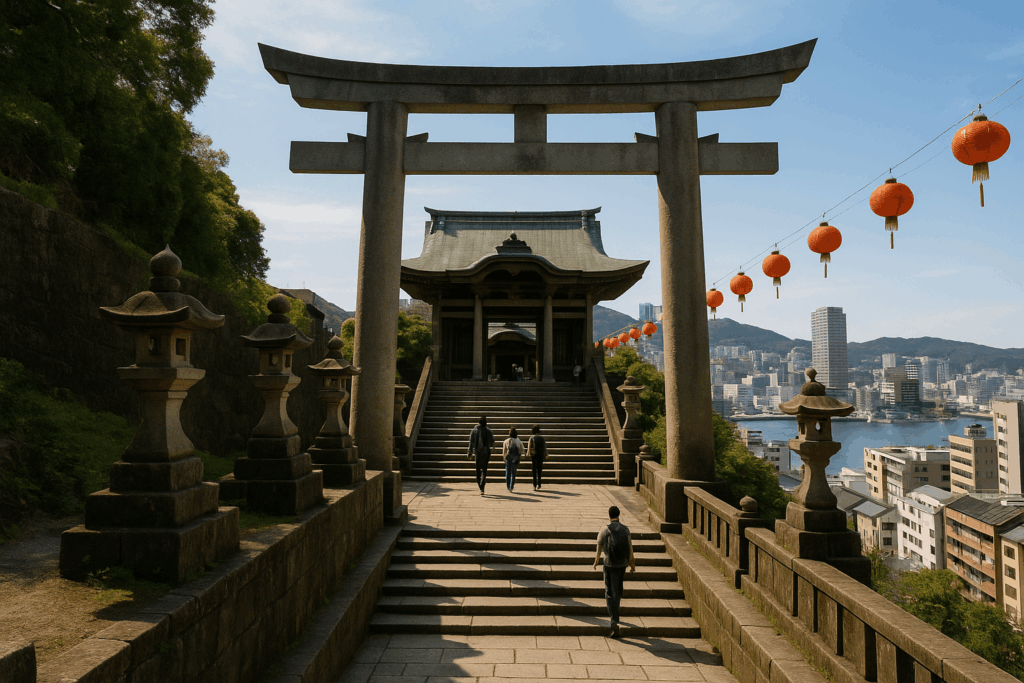
8. Suwa Shrine — City View & Spiritual Landmark
Located high on a hill, Suwa Shrine features long stone staircases, large torii gates, guardian lion statues, and wide views over the city. It also hosts the famous Nagasaki Kunchi Festival every October.
• Entry Cost: Free
• Recommended Visit Time: 45–60 minutes
• Best Time: Morning for peace, sunset for views
• Access: Tram to Suwa-jinja-shita stop + stairs
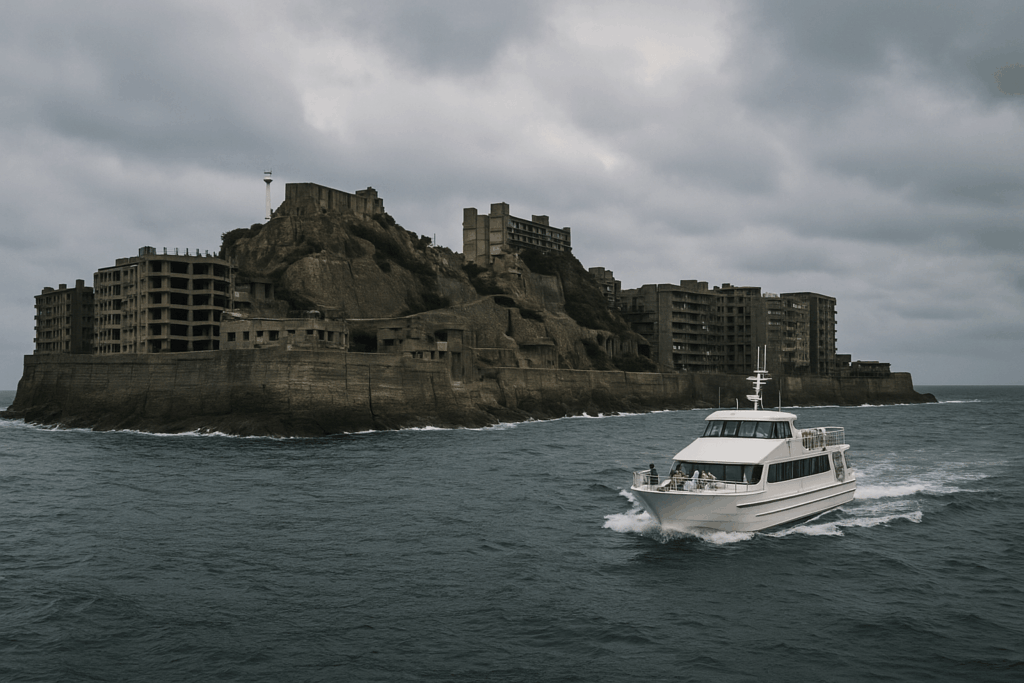
9. Hashima Island (Gunkanjima) — Abandoned Battleship Island
This small island packed with abandoned concrete apartments was once a coal-mining hub. Tour boats depart from Nagasaki Port and allow visitors to land when sea conditions permit. The island is a UNESCO World Heritage Site today.
• Tour Cost: ¥4,800–¥6,500 per adult
• Tour Duration: 2.5–3 hours
• Departure: Nagasaki Port
• Best Time: Clear weather only
• Important Note: Tours cancel easily in rough seas
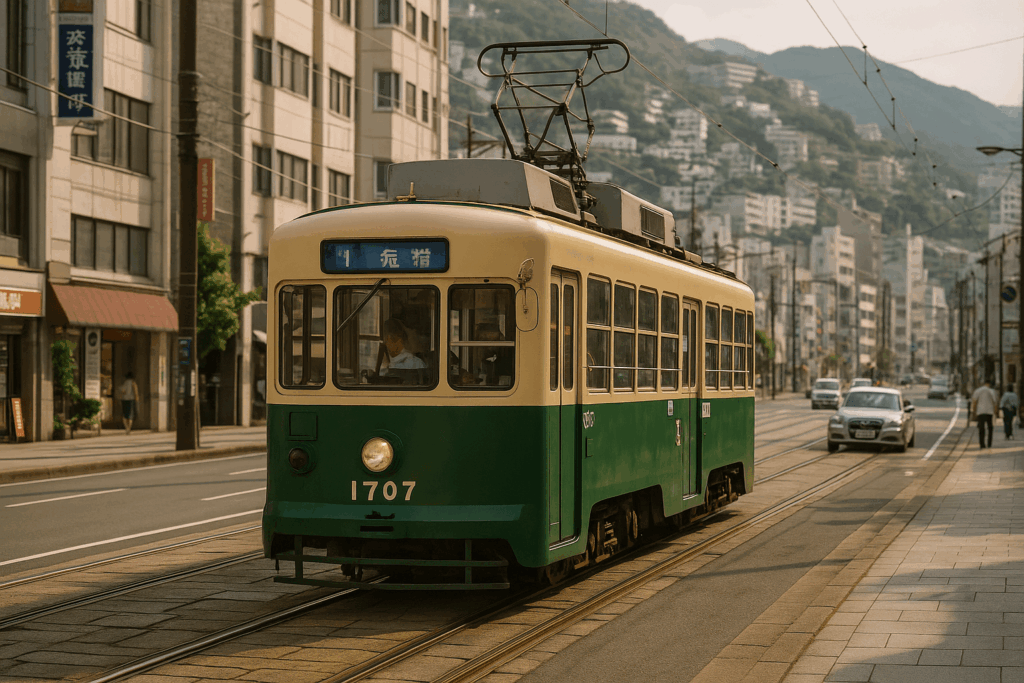
10. Nagasaki Electric Tramway — The City’s Lifeline
Nagasaki’s green-and-cream trams connect almost all tourist areas and are the easiest way to travel. Riding the tram itself feels nostalgic and is part of the Nagasaki experience.
• Flat Fare: ¥140 per ride
• 1-Day Pass: ¥600 (adults)
• Where to Buy: Nagasaki Station, hotels, tram offices
• Coverage: Peace Park, Dejima, Chinatown, Glover Garden, Suwa Shrine
How to Travel Around Osaka Efficiently
Getting to Nagasaki
From Fukuoka (Hakata Station):
• Nishi Kyushu Shinkansen “Kamome” + Relay Limited Express:
- Hakata → Takeo-Onsen (Shinkansen) → Nagasaki (relay limited express).
- About 1.5 hours total; covered by JR Pass.
• Highway Bus:
- From Hakata / Tenjin to Nagasaki Station area.
- Around 2–2.5 hours, roughly ¥2,300–¥3,300 one way.
From Other Kyushu Cities / Airports:
• Buses and trains connect Nagasaki with Saga, Kumamoto, Fukuoka airports, etc
Getting Around Inside Nagasaki
Trams (Nagasaki Electric Tramway):
• Best way to move between almost all tourist areas.
• 1-Day Tram Pass: ¥600 adults, ¥300 children.
Buses:
• Useful for some areas not on tram lines, but for most tourists, trams are enough.
Walking:
• City center (Nagasaki Station, Dejima, Chinatown, Meganebashi, Hamano-machi) is walkable, but be ready for slopes and stairs in some neighborhoods.
Taxis:
• Handy at night after trams stop, or to reach ropeway base quickly if you are short on time.
Approximate Local Transport Costs (Per Day)
• Tram-Only Sightseeing Day:
- 1-Day Tram Pass: ¥600 (very good value if you ride more than 4–5 times).
• Mixed Day (Tram + Occasional Bus/Taxi):
- ¥600 (tram pass) + ¥500–¥1,500 extra (one or two buses / short taxi).
Food & Restaurant Suggestions in Nagasaki
Nagasaki’s food reflects its Chinese, Western, and Japanese influences. The city is famous for big, filling noodle dishes, sweet cakes, and fusion meals.
Must-Try Local Specialties
Nagasaki Champon:
Thick, milky pork- and chicken-based soup with noodles, cabbage, bean sprouts, seafood, and pork slices. Invented in Nagasaki’s Chinatown to feed Chinese students, now a city symbol.
Sara Udon:
Crispy fried noodles (or sometimes normal noodles) on a plate, topped with thick stir-fried vegetables, pork, and seafood in a glossy sauce—like crunchy Chinese-style noodles.
Castella Cake:
Soft sponge cake brought from Portugal centuries ago; now a classic Nagasaki souvenir, sold by many famous brands.
Shippoku Ryori:
Nagasaki’s original fusion banquet cuisine, mixing Japanese, Chinese, and Western influences, usually served on a round table as many shared dishes.
Turkish Rice (Toruko Rice):
A Nagasaki “B-grade” favorite: pork cutlet, pilaf or rice, and Neapolitan-style spaghetti on one plate—simple, heavy, and fun.
Sasebo Burger & Goto Udon (Wider Prefecture):
From nearby Sasebo and the Goto Islands; you might see these dishes in Nagasaki city restaurants too.
Budget-Friendly Restaurants (¥500–¥1,500 per meal)
• Champon & Sara Udon Shops:
- Many around Chinatown and central Nagasaki; a bowl usually ¥800–¥1,200.
• Ramen / Udon / Teishoku Chains:
- Simple noodles and set meals near the station and shopping arcades.
• Gyudon & Family Restaurants:
- Sukiya, Yoshinoya, Matsuya, Gusto, etc., for quick cheap meals.
• Bakeries & Convenience Stores:
- Bread, onigiri, bentos for breakfast or quick dinner.
Vegetarian & Vegan Options
Nagasaki cuisine is heavy on meat, fish, and pork-based broths, so vegetarian/vegan options are more limited, but still possible:
• Italian / Western Cafés: Pasta with tomato or cream sauce, salads, veggie pizzas (ask “no meat, no fish”).
• Indian & Asian Restaurants: Usually offer vegetarian curries and rice.
• Conbini: Onigiri (ume, kombu), salads, breads and fruit are useful backups.
If you are strict vegetarian/vegan, it’s good to carry a Japanese explanation card saying you don’t eat meat, fish, dashi, eggs, or dairy.
Approximate Budget for a Day in Nagasaki
(Does not include long-distance train/bus from another city — only inside Nagasaki.)
Daily Budget Breakdown
Food & Dining: ¥1,500–¥5,500
• Breakfast: ¥400–¥1,000 (hotel, café, or convenience store)
• Lunch: ¥800–¥1,800 (champon/sara udon/teishoku)
• Dinner: ¥1,200–¥3,000 (izakaya, Turkish rice, or shippoku-style dishes)
• Snacks & Drinks: ¥300–¥700 (castella, coffee, soft drinks)
Transportation (Local): ¥600–¥2,000
• 1-Day Tram Pass: ¥600 (most people will buy this).
• Extra: ¥0–¥1,400 (maybe 1–2 buses or a short taxi if needed).
Attractions & Activities: ¥200–¥7,000+
• Atomic Bomb Museum: ¥200
• Glover Garden: ~¥620
• Dejima: ~¥520 (approx)
• Museum of History & Culture: ¥630
• Mt. Inasa Ropeway round trip: ~¥1,250 adults
• Hashima Cruise (optional big cost): around ¥4,800–¥6,500 per adult.
Shopping & Souvenirs: ¥500–¥8,000+
• Small souvenirs (castella, sweets, keychains): ¥500–¥2,000
• Bigger gifts or clothes: ¥3,000–¥8,000+
Nightlife / Extras: ¥0–¥3,000
• A couple of drinks, dessert café, or night snack after Mt. Inasa or tram rides.
Money-Saving Tips
• Get the Tram 1-Day Pass: If you visit 4–5 places, the ¥600 pass is cheaper than paying many single fares.
• Group Main Sights by Area:
- Day 1: Peace Park + Atomic Bomb Museum + Urakami area.
- Day 2: Dejima + Glover Garden + Oura Church + Chinatown.
• Use Lunch Sets: Many restaurants have cheaper lunch prices than dinner for similar food.
• Walk Between Close Stops: For example, between Dejima, Chinatown, Hamano-machi, and Meganebashi you can mostly walk.
• Buy Castella as Souvenir: It’s reasonably priced, easy to carry, and everyone likes it.
• Check Weather for Mt. Inasa & Hashima: Go on clear days; if cloudy or rainy, focus on museums and food instead.
Nagasaki is one of those cities where you feel both the pain of history and the warmth of everyday life at the same time—trams rattling past churches and temples, noodles steaming in Chinatown, and a calm breeze over Peace Park. If you want, I can now make the same style long page for another city like Fukuoka, Kagoshima, or Kumamoto so your “Journey Japan” site keeps a consistent format across Kyushu.