
Internet in Japan: SIM Cards, eSIMs, Pocket Wi-Fi & Free Wi-Fi Spots

Staying connected while traveling in Japan isn't just convenient – it's essential. From navigating complex train systems with Google Maps to translating restaurant menus, booking last-minute accommodations, and sharing your incredible experiences in real-time, reliable internet access transforms your Japanese adventure. Yet many travelers arrive unprepared, assuming free Wi-Fi will suffice or that their home phone plan will work seamlessly abroad.
The reality is more nuanced. While Japan is technologically advanced, its approach to public internet access differs significantly from Western countries. Understanding your connectivity options before arrival ensures you stay connected throughout your journey without breaking the bank or facing frustrating dead zones when you need navigation most urgently.
Understanding Japan's Internet Landscape
Why You Can't Rely on Free Wi-Fi Alone
Japan offers free Wi-Fi in many locations, but it's far less ubiquitous than travelers expect. Major tourist areas, airports, hotels, convenience stores, and some train stations provide free hotspots, but coverage is inconsistent. You'll find yourself offline precisely when you need connectivity most – navigating unfamiliar neighborhoods, checking train schedules, or finding your hotel after dark.
Free Wi-Fi networks often require registration processes, accepting terms and conditions, or even watching advertisements before granting access. Some networks disconnect after 30-60 minutes, requiring re-authentication. This constant interruption becomes frustrating when you're trying to navigate efficiently or maintain communication with travel companions.
Security concerns also arise with public Wi-Fi. Using unsecured networks for banking, email, or entering passwords exposes you to potential security risks. For peace of mind and consistent connectivity, having your own dedicated internet solution is invaluable.
Tourist SIM Cards: Traditional and Reliable
How SIM Cards Work in Japan
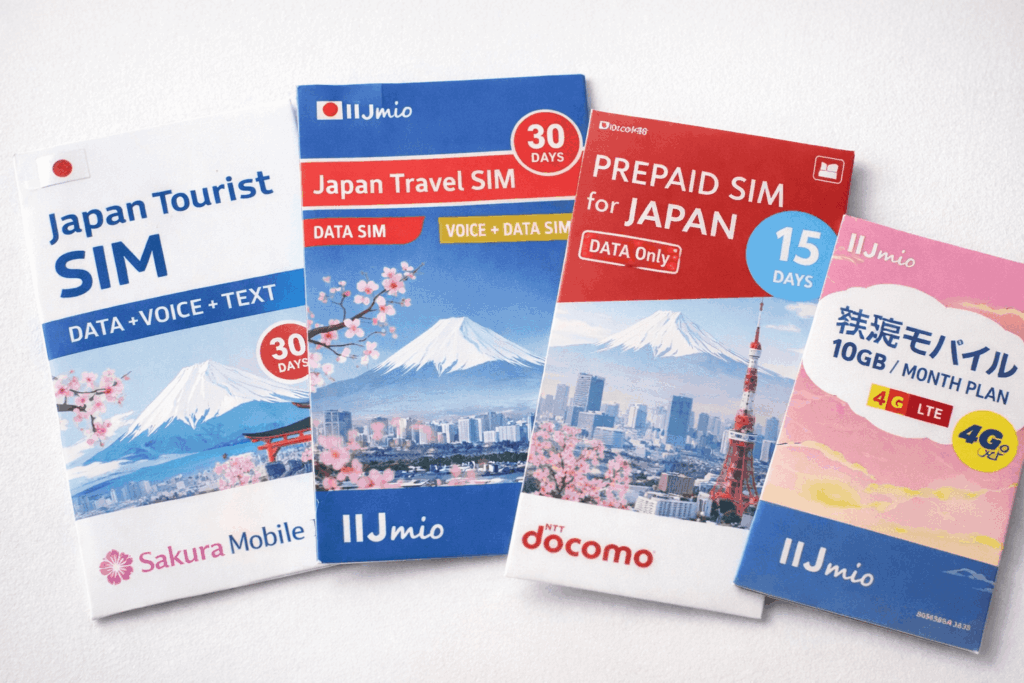
Tourist SIM cards provide straightforward connectivity – purchase a prepaid SIM, insert it into your unlocked phone, and enjoy mobile data throughout Japan. Major providers include Sakura Mobile, IIJmio, and Mobal, offering plans ranging from 1GB to unlimited data for periods from three days to three months.
SIM cards typically cost between ¥2,000-¥6,000 depending on data allowance and duration. Most tourist SIMs are data-only, meaning you won't have a Japanese phone number for making calls, though you can use internet-based calling apps like WhatsApp or LINE. Some premium SIM cards include limited voice minutes and SMS capabilities for higher prices.
Purchasing options include buying online before your trip (shipped to your home or available for airport pickup) or purchasing directly at Japanese airports upon arrival. Major airports like Narita, Haneda, and Kansai have multiple SIM card vending machines and service counters in arrival halls.
Requirements and Considerations
Your phone must be unlocked to use Japanese SIM cards. Contact your home carrier before traveling to ensure your device isn't locked to their network. Most modern smartphones purchased outright or after contract completion are unlocked, but carrier-financed phones often remain locked.
Check that your phone supports Japanese network frequencies. Japan primarily uses LTE bands 1, 3, 8, 19, 21, and 28. Most international smartphones support these bands, but older devices might experience connectivity issues. Verify compatibility on your phone manufacturer's specifications page.
Installation is simple – remove your home SIM card (store it safely), insert the Japanese SIM, and configure APN settings if not automatic. Instructions come with every SIM card, and airport service counters provide installation assistance if needed.
eSIMs: The Modern Digital Solution
What Makes eSIMs Convenient
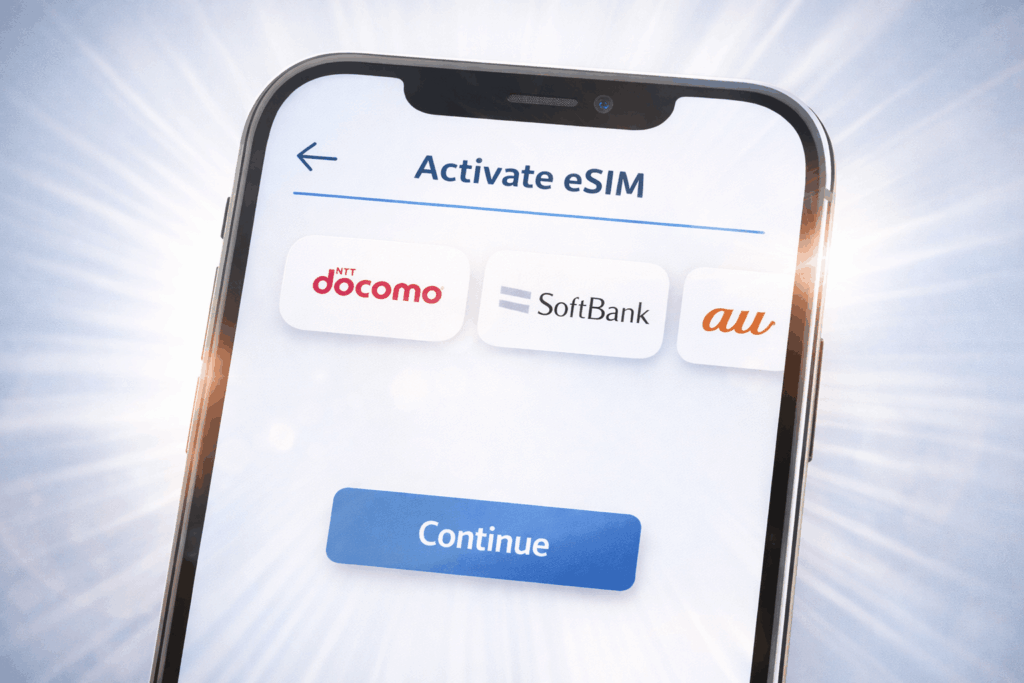
eSIMs represent the future of mobile connectivity – entirely digital SIM cards downloaded and activated through your phone's settings. No physical card to purchase, insert, or lose. Simply buy an eSIM plan online, scan a QR code, and activate your data connection within minutes.
Services like Airalo, Holafly, and Ubigi offer Japan-specific eSIM plans starting around $5 for 1GB to $50+ for unlimited monthly data. The convenience is unmatched – purchase from home, activate upon landing, and switch back to your home SIM afterward without physically swapping cards.
eSIMs work brilliantly for dual-SIM phones, allowing you to keep your home number active for calls and texts while using the eSIM for data. This means you won't miss important calls or messages while traveling, and you can easily switch between networks.
eSIM Compatibility and Setup
eSIM technology requires compatible devices – newer iPhone models (XS and later), recent Google Pixels, Samsung Galaxy S20 and newer, and most flagship smartphones released after 2019 support eSIMs. Verify compatibility in your phone's settings under "Cellular" or "Mobile Networks" – if you see an option to "Add eSIM" or "Add Cellular Plan," your device supports it.
Purchasing eSIMs is entirely online. Browse provider websites, select your data plan and duration, complete payment, and receive a QR code via email. Scan this code through your phone's settings, follow activation prompts, and you're connected. The entire process takes 10-15 minutes.
Consider purchasing your eSIM a day before departure to ensure everything activates correctly before you leave home. Most eSIMs activate when they first connect to Japanese networks, so the validity period doesn't begin until you actually arrive in Japan.
Pocket Wi-Fi: Share Connectivity with Travel Companions
How Pocket Wi-Fi Works
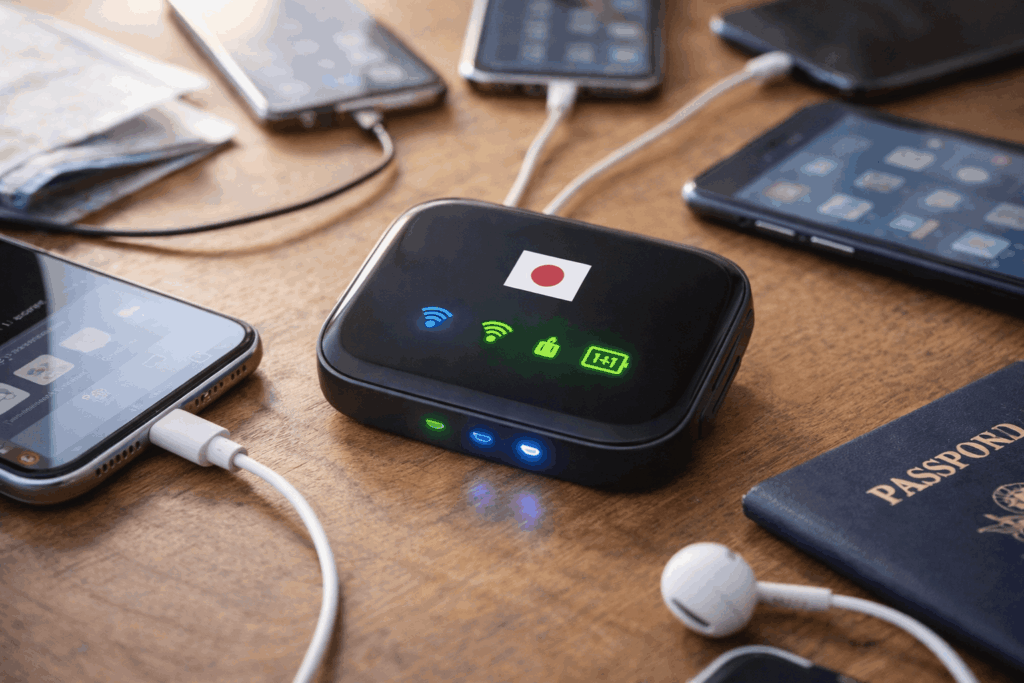
Pocket Wi-Fi devices are portable routers providing Wi-Fi hotspots that multiple devices can connect to simultaneously. One pocket Wi-Fi device can serve 5-10 connected devices, making them ideal for families or groups of friends traveling together who can split the cost.
Rental services like Japan Wireless, Ninja WiFi, and Global Advanced Communications offer unlimited data pocket Wi-Fi rentals for ¥500-¥1,200 per day. You pick up the device at the airport, use it throughout your trip, and return it at the airport or via mail before departing.
Pocket Wi-Fi provides reliable 4G LTE connectivity across Japan, including remote areas where public Wi-Fi is nonexistent. Battery life typically lasts 6-12 hours, requiring daily charging but easily managed with portable power banks.
How Pocket Wi-Fi Works
Pocket Wi-Fi excels for groups sharing costs and connectivity. One device for ¥800 daily split among four travelers costs just ¥200 per person – cheaper than individual SIM cards. It also works with any device regardless of SIM compatibility, including tablets, laptops, and locked phones.
However, pocket Wi-Fi requires carrying an additional device and keeping it charged. If your group splits up during the day, only the person carrying the device stays connected. Lost or damaged devices incur replacement fees of ¥20,000-¥40,000.
Solo travelers or those wanting independence generally prefer SIM cards or eSIMs. Groups staying together most of the time benefit from pocket Wi-Fi's shared connectivity and cost efficiency.
Free Wi-Fi in Japan: What's Actually Available
Where to Find Reliable Free Wi-Fi
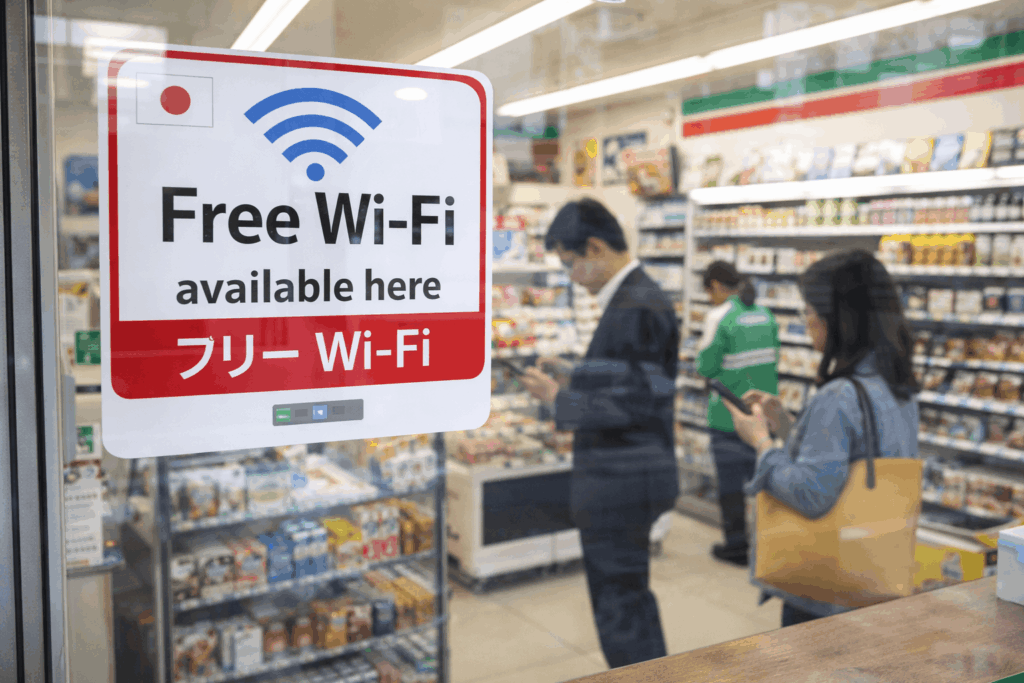
Despite limitations, free Wi-Fi serves as a useful supplement to paid connectivity. Japan has made significant efforts to expand tourist-friendly Wi-Fi, particularly in major cities. The "Japan Connected-free Wi-Fi" app consolidates multiple free networks into one easy authentication system, simplifying the connection process.
Convenience stores like 7-Eleven, FamilyMart, and Lawson offer free Wi-Fi – incredibly useful since these stores appear on virtually every block in urban areas. Major train stations provide free Wi-Fi in waiting areas and platforms. Airports, tourist information centers, and shopping districts typically offer complimentary access.
Starbucks, McDonald's, and other international chains provide free Wi-Fi, as do many hotels and ryokan for guests. Department stores and shopping malls in cities offer building-wide Wi-Fi networks.
Limitations and Practical Expectations
Free Wi-Fi's biggest limitation is geographic restriction. Outside major tourist areas, free networks become scarce. Rural destinations, mountain villages, and smaller cities offer minimal public connectivity. Even in Tokyo, residential neighborhoods often lack free access.
Time limits and registration requirements create friction. Many networks require email registration, accepting terms, or watching brief advertisements. Session time limits mean re-authenticating every 30-60 minutes. For quick map checks or translations, this works fine. For continuous navigation or communication, it's frustrating.
Making Your Choice: Which Option Suits You Best
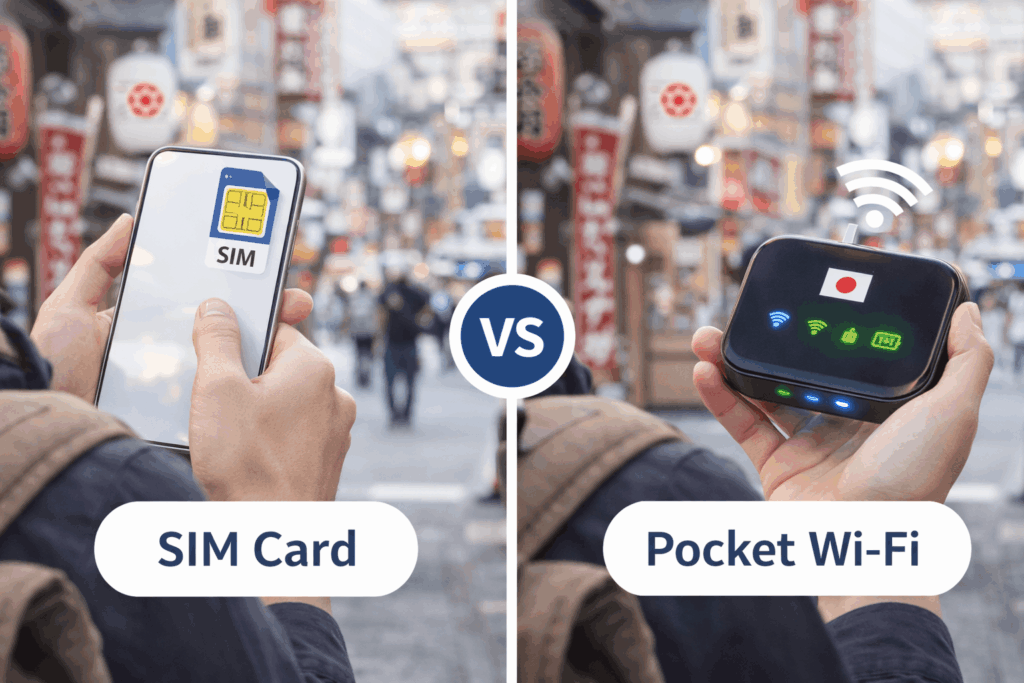
Your ideal connectivity solution depends on your specific travel style and needs. Solo travelers exploring independently benefit most from eSIMs – instant activation, no physical devices to manage, and seamless switching between home and travel networks. Tech-savvy travelers with compatible phones find eSIMs the most convenient option.
Travelers with older phones or those uncomfortable with digital setup prefer traditional SIM cards – straightforward, physical, and widely available. Budget-conscious solo travelers might choose smaller data packages supplemented with strategic free Wi-Fi usage.
Groups and families traveling together should seriously consider pocket Wi-Fi. Split costs make it economical, and shared connectivity keeps everyone connected without multiple plans. Just designate a reliable person to carry the device.
Stay Connected Throughout Your Japanese Journey
Reliable internet connectivity in Japan isn't optional – it's fundamental to enjoying your trip fully. Whether navigating Kyoto's temple districts, translating menus in Osaka, checking train schedules in rural areas, or sharing photos from Mount Fuji, consistent connectivity enhances every aspect of travel. Choose the solution matching your travel style, group size, and budget. Purchase before departure when possible, allowing time to resolve any technical issues before landing. With proper internet connectivity arranged, you'll navigate Japan confidently, communicate easily, and document your journey seamlessly. The investment in reliable connectivity pays dividends in reduced stress, better navigation, and richer travel experiences throughout your Japanese adventure.