
Shogatsu – The Japanese New Year Celebration
Shogatsu is Japan’s most important spiritual festival, celebrated to welcome a fresh beginning, good fortune, and happiness. Families come together to enjoy traditional meals, visit temples for prayers, exchange wishes, and reflect on the past year while embracing hope, renewal, and positive energy for the year ahead.
Shogatsu: Japan’s Most Important Festival
Shogatsu (Japanese New Year) is the biggest festival in Japan, celebrated from January 1st to January 3rd every year. Unlike many countries that only celebrate New Year for one night, Japan treats Shogatsu as a deep cultural and spiritual event that lasts several days. It represents new beginnings, purification, gratitude, and hope for a successful year ahead.
During Shogatsu, people clean their homes, settle old matters, visit temples, eat traditional food, and spend quality time with family. Almost all offices, schools, and businesses remain closed so people can focus fully on this important time.
Preparations Before Shogatsu
Before the New Year arrives, Japanese families do a deep cleaning called Osoji. Homes, shops, and workplaces are cleaned to remove bad luck and negative energy from the past year.
Outside houses and buildings, special decorations are placed:
Kadomatsu – Bamboo and pine decoration for good fortune
Shimenawa – Sacred rope to keep evil spirits away
Kagami Mochi – Rice cakes placed as offerings for blessings
These decorations show respect for nature, spirits, and traditional beliefs.
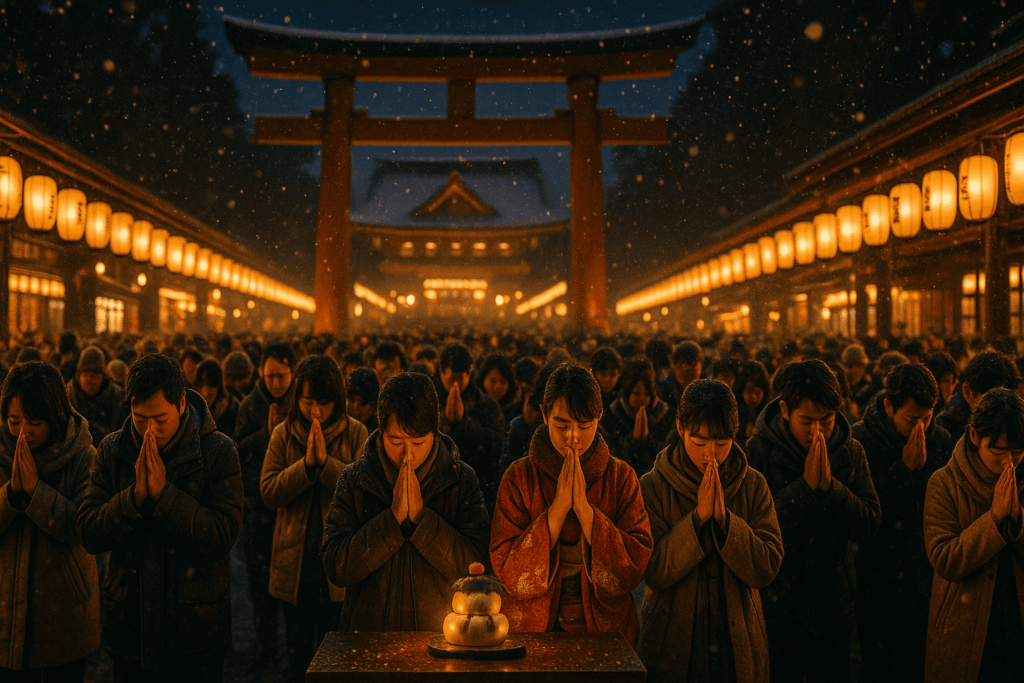
Hatsumode – First Shrine Visit of the Year
One of the most important Shogatsu traditions is Hatsumode, which means the first temple or shrine visit of the new year. Millions of people visit famous shrines like:
• Meiji Shrine (Tokyo)
• Fushimi Inari (Kyoto)
• Sumiyoshi Taisha (Osaka)
People pray for:
• Good health
• Success in career
• Love and happiness
• Safety for family
Visitors also buy lucky charms (Omamori) and draw fortune slips (Omikuji) to know what the coming year holds.
Osechi Ryori – Traditional New Year Food
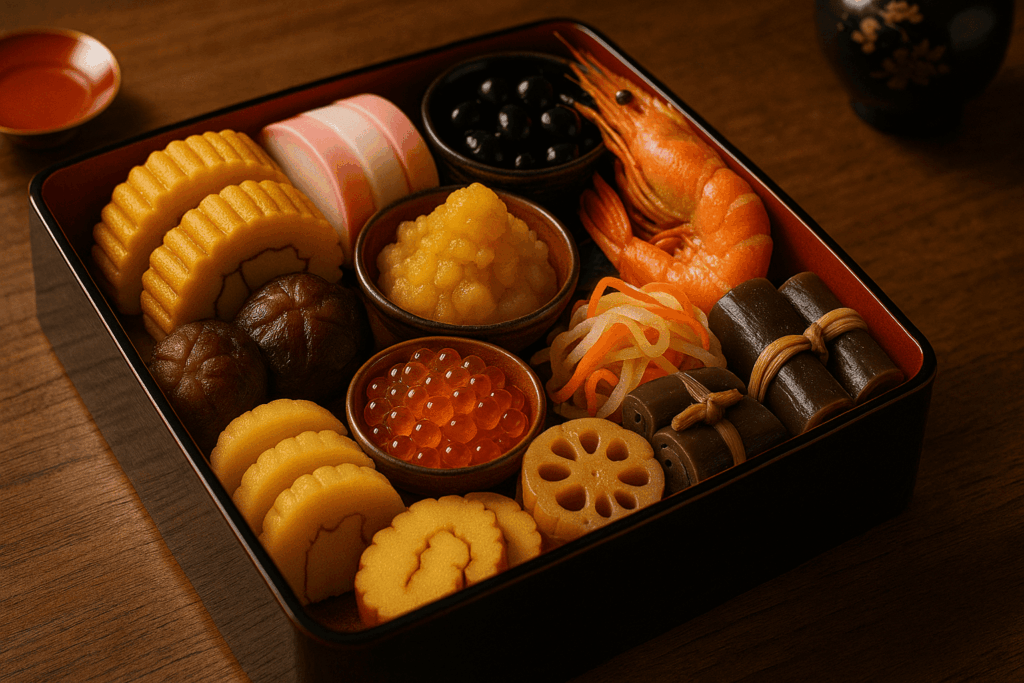
Shogatsu is also famous for Osechi Ryori, a special meal prepared in advance and packed in beautiful lacquer boxes. Each dish has a symbolic meaning:
• Black beans (Kuromame) – Good health & hard work
• Sweet rolled omelet (Datemaki) – Knowledge & success
• Fish cake (Kamaboko) – Happiness
• Herring roe (Kazunoko) – Family growth
Another common dish is Ozoni, a soup with mochi rice cake that changes recipe according to region.
New Year Cards & First Sunrise
Japanese people send Nengajo (New Year cards) to friends, teachers, and relatives as a sign of respect and good wishes. These cards usually arrive exactly on January 1st.
People also wake up early to watch the Hatsuhinode (first sunrise of the year). Watching the sunrise is believed to bring positive energy and luck for the coming year.
Clothing, Games & Family Time
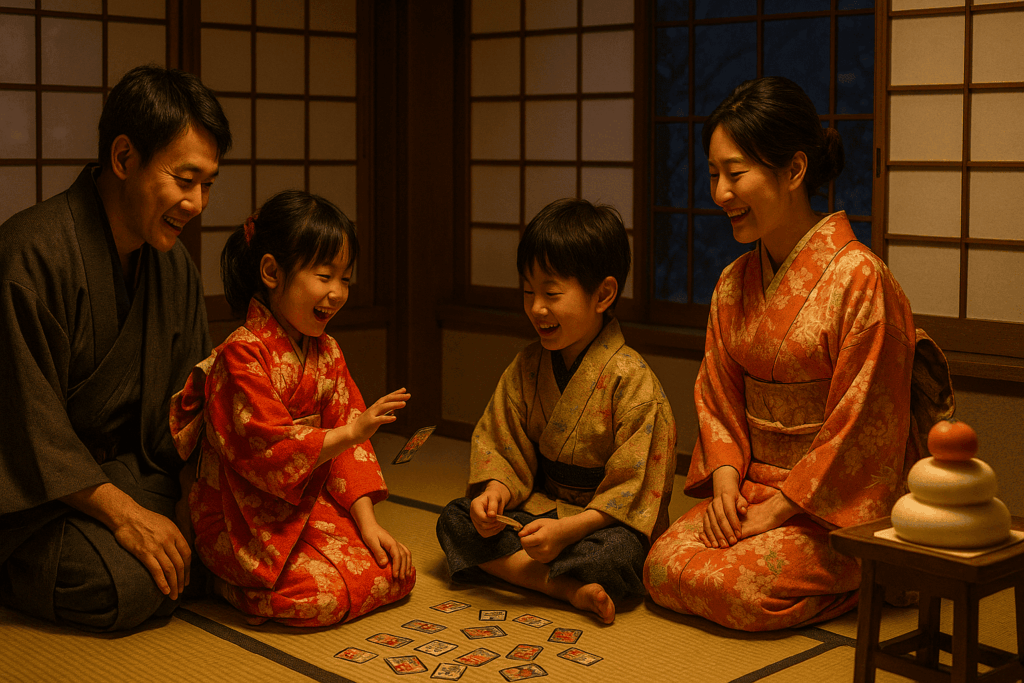
During Shogatsu, many people wear:
• Kimono
• Traditional coats (Haori)
Children enjoy traditional games like:
• Takoage (kite flying)
• Karuta (card game)
• Spinning tops
Families gather to eat, talk, relax, and start the year peacefully together.
Why Tourists Love Shogatsu in Japan
Shogatsu is one of the most beautiful times to visit Japan because the country feels calm, spiritual, and full of tradition.
Reasons Tourists Love Shogatsu:
• Japan looks calm, peaceful, and spiritual
• Beautiful New Year decorations are seen everywhere
• Night shrine visits feel magical and emotional
• Unique traditional New Year food is a special experience
• Offers a deep cultural connection
• Creates perfect photography moments
• Shows the true spiritual side of Japan
Shogatsu gives both locals and tourists a chance to slow down, reflect on life, and begin the new year with happiness, peace, and positive energy.
Conclusion
Shogatsu is not just a New Year celebration — it is a complete cultural rebirth for the Japanese people. From temple prayers and special food to family bonding and spiritual rituals, every part of Shogatsu reflects gratitude, respect, and hope. If you truly want to understand Japan’s heart, experiencing Shogatsu is a must on your Journey Japan adventure.