
Obon Festival – Japan’s Beautiful Festival of Ancestors & Light
Obon is one of Japan’s most emotional and spiritual festivals, held to honor the spirits of ancestors. With glowing lanterns, peaceful dances, and family prayers, Obon connects the living with the departed, reminding people of gratitude, remembrance, tradition, and the unbreakable bond between past generations and the present today forever.
Obon Festival: Japan’s Sacred Time of Remembrance
The Obon Festival is a deeply spiritual Japanese tradition that honors the souls of ancestors. It is celebrated every year in mid-August (some regions celebrate in July). During Obon, Japanese families believe that the spirits of their loved ones return to the world of the living for a short time.
Unlike loud celebration festivals, Obon is filled with emotion, respect, memory, and peace. Families clean graves, light lanterns, pray at temples, and perform traditional dances to welcome and guide ancestral spirits. It is a time when Japan slows down to remember the past with love and gratitude.
History & Belief Behind Obon
Obon has its roots in Buddhist traditions that came to Japan over 500 years ago. According to belief, a disciple of Buddha learned that his late mother was suffering in the spirit world. When he offered food and prayers, her soul was freed — and he danced with joy. This dance later became Bon Odori, the famous Obon dance.
Obon today represents:
• Love for ancestors
• Gratitude for family roots
• Respect for life and death
• Spiritual connection between generations
For many Japanese, Obon is the most emotional festival of the year.
History of Chanoyu
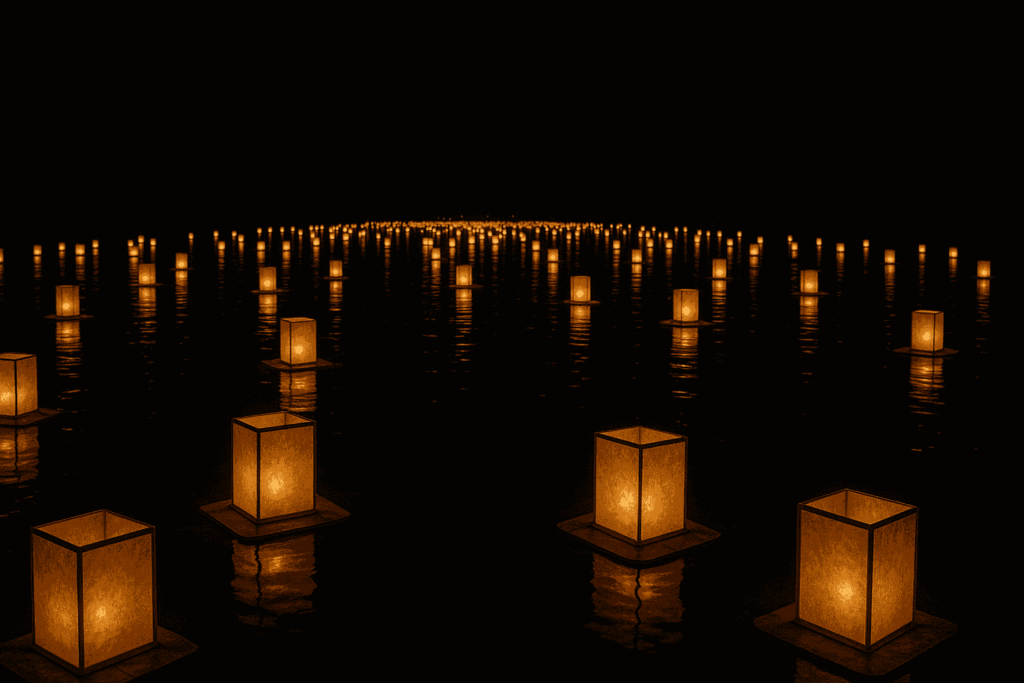
Lanterns are the most powerful symbol of Obon. Families light paper lanterns (Chochin) to guide the spirits of their ancestors back home. On the final day of Obon, many places hold Toro Nagashi, where glowing lanterns are floated down rivers.
This floating lantern ritual represents:
• Farewell to visiting spirits
• Peaceful return to the spirit world
• Prayers for happiness and calm
Watching hundreds of lanterns drift quietly across the water under the night sky is one of the most touching sights in Japan.
Bon Odori – The Dance of Joy & Remembrance
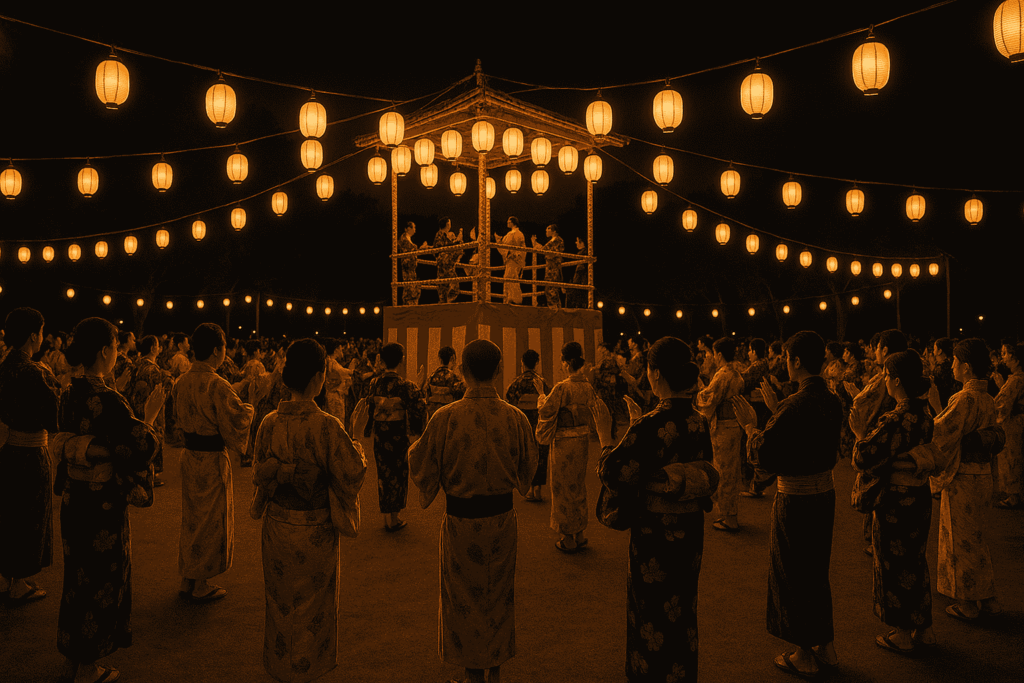
Bon Odori is the traditional dance performed during Obon. People dress in yukata (summer kimono) and gather in open grounds, temples, and town squares to dance in large circles around a raised stage.
The movements are:
• Slow and graceful
• Easy for everyone to join
• Different in every region
Bon Odori is not a performance — it is a community dance where everyone is welcome. Old and young, locals and tourists all dance together to honor ancestral spirits with joy instead of sorrow.
Family Traditions During Obon
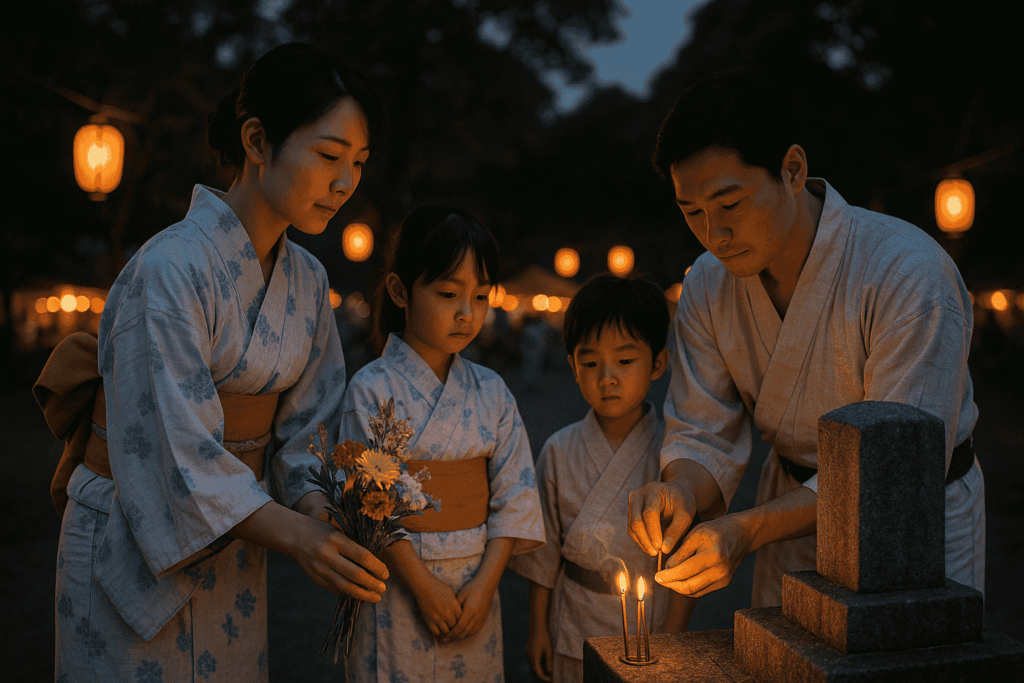
During Obon, families return to their hometowns and:
• Clean ancestral graves
• Offer flowers, incense, and food
• Pray at home altars (Butsudan)
• Share meals with relatives
Special food offerings such as rice, fruits, and seasonal dishes are placed for the visiting spirits. Many families also make small animal-shaped vegetables using cucumber and eggplant, symbolizing spiritual transport.
Obon is also one of the biggest travel seasons in Japan, as millions return home to be with family.
Best Places to Experience Obon Festival
Some of the best places to experience Obon include:
• Kyoto – Traditional temple dances
• Tokyo – River lantern floating ceremonies
• Tokushima – Famous Awa Odori dance
• Hiroshima & Nagasaki – Peaceful memorial events
Each region celebrates Obon in its own unique way, making it a rich cultural experience for travelers.
Why Tourists Love Obon Festival
• Emotional and spiritual atmosphere
• Peaceful lantern photography
• Beautiful summer night festivals
• Deep connection with Japanese family culture
• Easy participation in Bon Odori
• Meaningful cultural experience
Obon allows visitors to feel Japan’s heart and soul, not just see its landmarks.
Conclusion
Obon Festival is not just about remembering the dead — it is about celebrating life, family, gratitude, and eternal bonds. Through glowing lanterns, gentle dances, and silent prayers, Obon shows the most emotional side of Japanese culture. If you want to experience Japan beyond entertainment and into its spiritual depth, Obon Festival is an unforgettable chapter of your Journey Japan adventure.