
Kaiseki Ryori – Japan’s Highest Art of Fine Dining
Kaiseki Ryori is Japan’s most elegant and traditional multi-course meal, where food becomes art. It represents a perfect balance of taste, season, beauty, and mindfulness. Each dish is carefully prepared to honor nature, harmony, and simplicity, offering a refined dining experience that reflects deep cultural values and culinary artistry worldwide.
Kaiseki Ryori: The Soul of Traditional Japanese Cuisine
Kaiseki Ryori is the highest form of traditional Japanese dining, known for its elegance, seasonal beauty, and perfect balance of flavors. It is not just a meal — it is a complete cultural experience where each dish tells a story of nature, season, and craftsmanship.
Unlike normal restaurant food, Kaiseki is served as a multi-course meal, with carefully designed small portions. Every detail matters — from the color of the plate to the way food is arranged. Kaiseki reflects Japan’s deep respect for nature, simplicity, and harmony.
Today, travelers from all over the world come to Japan just to experience an authentic Kaiseki meal.
Origin & Connection with the Tea Ceremony
Kaiseki Ryori originally developed alongside the Chanoyu (Japanese Tea Ceremony). In early times, a small meal was served before drinking matcha tea to prepare the stomach. This simple meal slowly evolved into today’s luxurious Kaiseki dining experience.
The philosophy behind Kaiseki follows the same four principles as the tea ceremony:
• Wa (Harmony)
• Kei (Respect)
• Sei (Purity)
• Jaku (Tranquility)
This is why Kaiseki feels peaceful, calm, and deeply spiritual.
Structure of a Traditional Kaiseki Meal
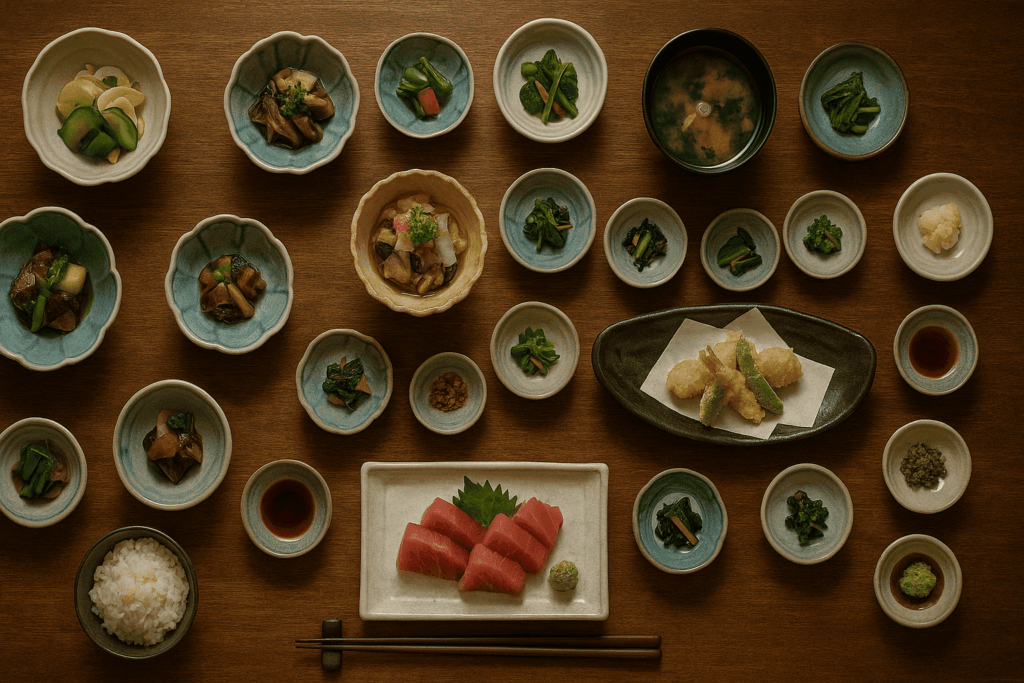
A traditional Kaiseki meal follows a fixed course order. Each dish is light, fresh, and beautifully presented. A full Kaiseki course usually includes:
• Sakizuke – Small appetizer
• Hassun – Seasonal tasting plate
• Mukozuke – Fresh sashimi
• Takiawase – Simmered vegetables
• Yakimono – Grilled dish
• Gohan – Rice
• Konomono – Pickles
• Mizumono – Dessert
Each item uses seasonal ingredients, meaning the menu changes completely depending on the time of year.
Food Presentation: Where Cuisine Becomes Art
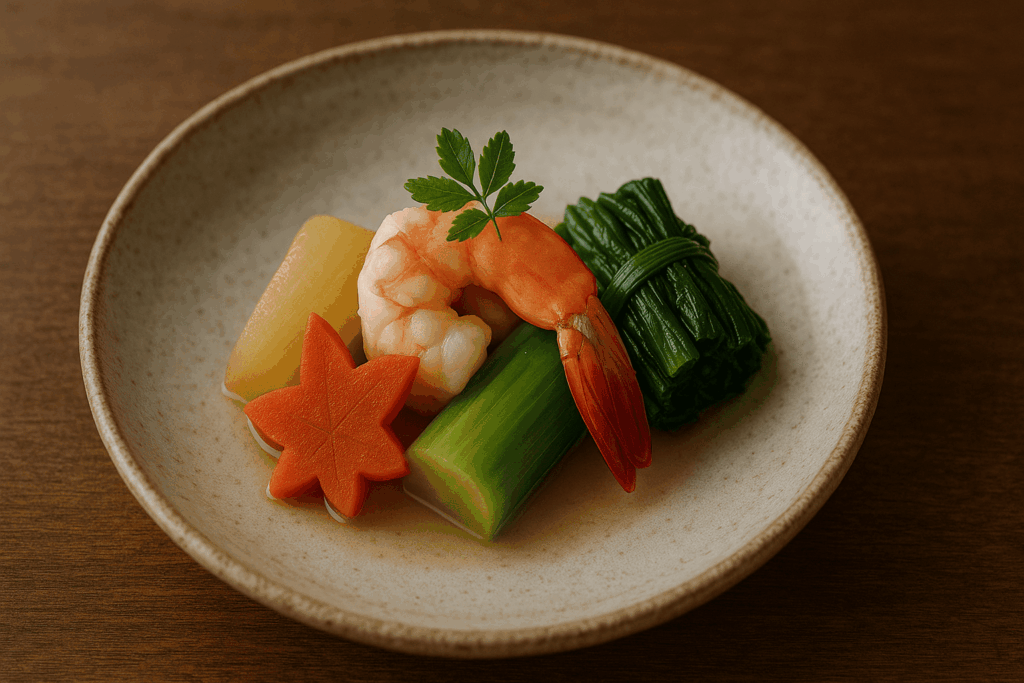
Kaiseki is famous not only for its taste but also for visual beauty. Chefs carefully select:
• Seasonal leaves and flowers
• Handmade ceramic plates
• Natural colors inspired by seasons
For example:
• Spring dishes focus on pink, green, and floral themes
• Autumn dishes use warm brown, red, and gold tones
Even the plate is chosen to match the season. Every dish looks like a painting before you even take your first bite.
Kaiseki Dining Experience for Tourists
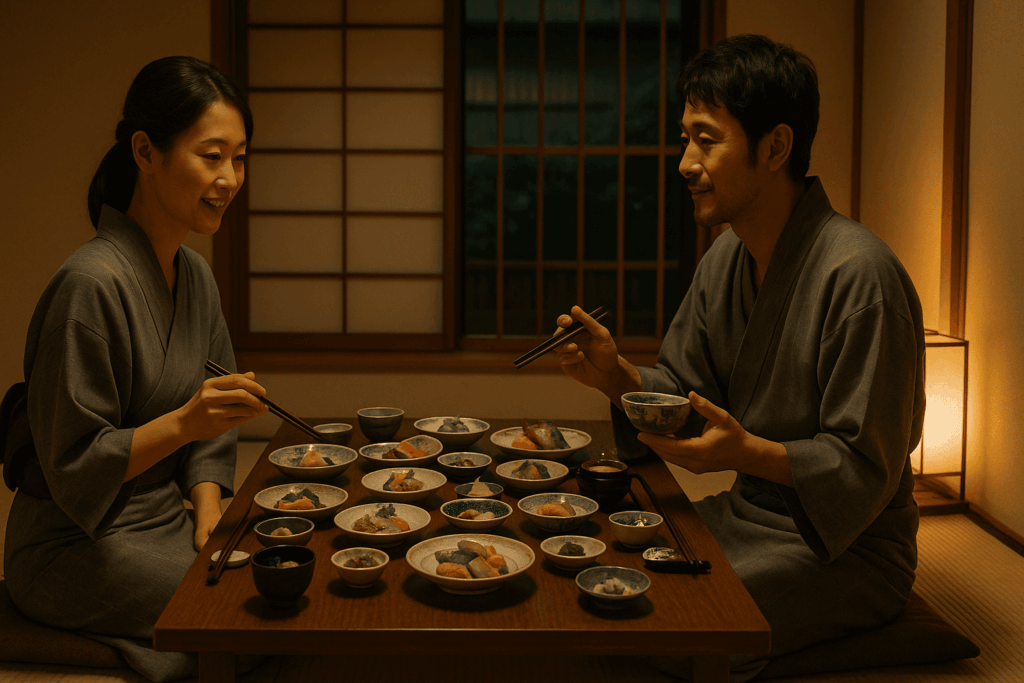
Most Kaiseki meals are enjoyed in:
• Ryokan (traditional Japanese inns)
• High-end traditional Kyoto restaurants
• Cultural dining houses
Guests usually sit on tatami mats, and the meal is served slowly, one dish at a time. Silence, gentle movements, and respect for food create a peaceful and luxurious atmosphere.
The chef often prepares dishes right in front of guests, making the experience even more special and personal.
Best Places to Experience Kaiseki Ryori
The best Kaiseki experiences can be found in:
• Kyoto – The heart of traditional cuisine
• Tokyo – Modern luxury Kaiseki restaurants
• Kanazawa – Seafood-focused Kaiseki
• Hakone & Takayama – Ryokan-style Kaiseki meals
Prices range from ¥8,000 to ¥40,000+ per person, depending on the restaurant and number of courses.
Why Tourists Love Kaiseki Ryori
• Luxury cultural dining experience
• Seasonal and fresh ingredients
• Artistic presentation
• Calm, peaceful environment
• Deep connection with Japanese traditions
• Perfect for special occasions and fine dining lovers
Kaiseki allows travelers to taste Japan’s culture, not just see it.
Conclusion
Kaiseki Ryori is not simply food — it is a celebration of seasons, craftsmanship, and mindfulness. From the smallest garnish to the main course, every detail is designed with care and meaning. If you want to experience Japan at its most refined and beautiful level, enjoying a traditional Kaiseki meal is an unforgettable highlight of your Journey Japan experience.