
Chanoyu – The Sacred Japanese Tea Ceremony
Chanoyu, Japan’s traditional tea ceremony, represents harmony, respect, purity, and peace. More than simply drinking tea, it is a cultural ritual that teaches patience, mindfulness, and an appreciation for simplicity. Each movement is slow, meaningful, and deeply connected to Japanese values and calm living.
Chanoyu: The Art of Japanese Tea Ceremony
Chanoyu, also known as Sado or The Way of Tea, is one of Japan’s most graceful and meaningful cultural traditions. It is a ritualized way of preparing and serving matcha (powdered green tea) while following strict etiquette, movements, and spiritual values. Practiced for over 400 years, Chanoyu is deeply influenced by Zen Buddhism and focuses on inner peace, respect for others, and appreciation of the present moment. Unlike normal tea drinking, Chanoyu is a complete cultural performance where every movement — from cleaning the tea bowl to serving the tea — has a deep meaning.
History of Chanoyu
The roots of Chanoyu go back to the 15th century, but it was perfected by Sen no Rikyu, the most famous tea master in Japanese history. He introduced the philosophy of:
• Wa (Harmony)
• Kei (Respect)
• Sei (Purity)
• Jaku (Tranquility)
These four principles still guide tea ceremonies today. Chanoyu became popular among samurai warriors, monks, and nobles, and later spread to common people.
History of Chanoyu
A traditional Chanoyu ceremony usually takes place in a tea room with tatami mats, soft lighting, and simple decor. The experience follows a calm and slow process:
Guests enter quietly and bow.
1. The host cleans the tea bowl and tools with precise movements.
2. Hot water is added to matcha powder.
3. The tea is whisked using a bamboo whisk.
4. The bowl is served to each guest with respect.
Guests rotate the bowl before drinking, sip silently, and admire the bowl’s design. Silence, eye contact, and gentle gestures create a peaceful environment.
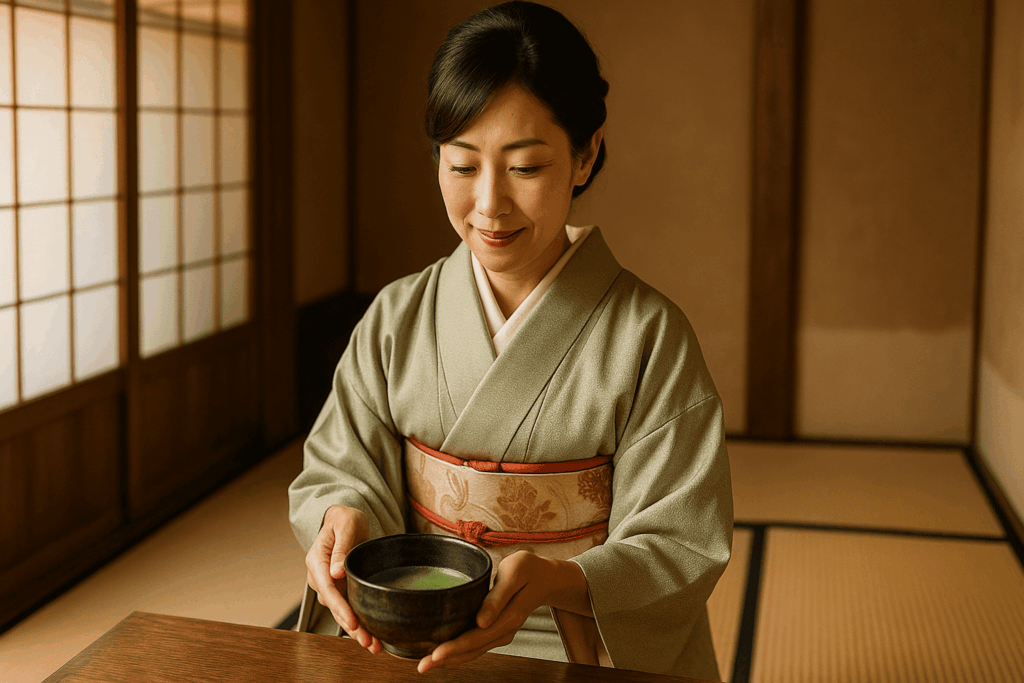
Traditional Clothing & Tools
The host usually wears a kimono, adding elegance to the ceremony. Important tools used include:
• Chawan – Tea bowl
• Chasen – Bamboo whisk
• Chashaku – Tea scoop
• Natsume – Tea container
Each item is carefully selected based on the season, showing Japan’s deep connection with nature.

Cultural & Spiritual Meaning
Chanoyu teaches people to slow down and live in the moment. It is about:
Respecting others
• Accepting simplicity
• Finding peace in silence
• Appreciating small details
This is why many Japanese students still learn tea ceremony in schools, and tourists are encouraged to experience it to truly understand Japanese culture.
Where Can You Experience Chanoyu in Japan?
You can experience authentic Chanoyu in:
• Kyoto – Traditional tea houses & temples
• Tokyo – Cultural centers & tea schools
• Kanazawa & Nara – Historical tea districts
Many places allow tourists to participate in a real tea ceremony, wear kimono, and even prepare matcha themselves.

Why Tourists Love Chanoyu
• Peaceful and relaxing experience
• Deep cultural learning
• Beautiful photography moments
• Connection with Japanese traditions
• Unique souvenir memories
Chanoyu is not rushed — it teaches you to pause, breathe, and appreciate life.
Conclusion
Chanoyu is more than a tea ceremony. It is a spiritual journey into the heart of Japan’s culture. Through calm movements, shared silence, and warm matcha, it teaches lessons of patience, respect, and harmony. If you truly want to understand Japan beyond technology and cities, experiencing Chanoyu is a must.