
Nara: Japan’s Ancient Capital of Temples, Nature & Gentle Deer
Nara is Japan’s first permanent capital and a deeply historic city where Buddhism, Shinto, and early culture flourished over 1,300 years ago. Today, massive wooden temples, sacred forests, stone lanterns, traditional streets, and free-roaming deer create a calm atmosphere unlike Osaka or Tokyo. Most sights cluster around Nara Park, home to Todai-ji’s Great Buddha and Kasuga Taisha’s lanterns. Beyond, explore Naramachi, Horyu-ji, and scenic Mount Wakakusa. This guide helps first-time visitors plan transport, food, budgets, and visits with ease today.
Top 10 Must-Visit Places in Kobe
Most of Nara’s main attractions are concentrated around Nara Park, within walking distance of Kintetsu Nara Station and a short bus ride from JR Nara Station. Below are 10 essential spots that showcase Nara’s temples, shrines, gardens, history, and everyday life. You don’t need to rush—just link a few together based on your interests and enjoy exploring at your own pace.
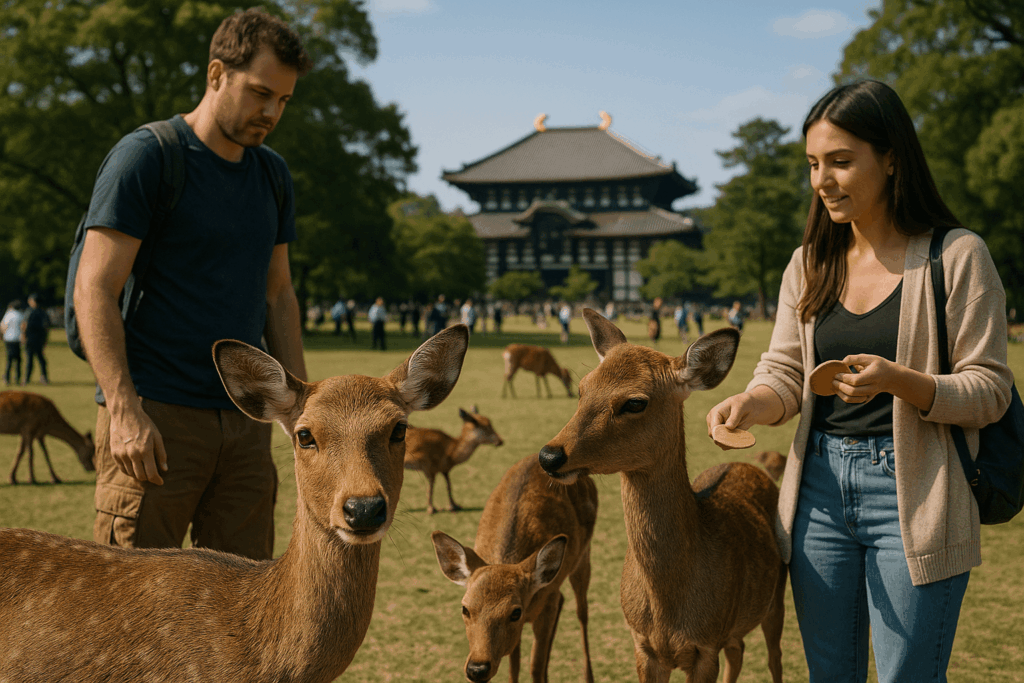
1. Nara Park & Friendly Deer — Heart of the City
Nara Park is a vast green area stretching across central Nara, dotted with ponds, lawns, forests, and paths connecting many of the city’s most famous temples and museums. The park’s most famous “residents” are the over 1,000 semi-wild deer, considered messengers of the gods in local Shinto belief. You can buy special “deer crackers” (shika senbei) sold by vendors and feed them—some deer even bow their heads in expectation.
• Approx Cost: Free to enter the park (crackers around ¥200)
• Must Do: Feed the deer, relax on the grass, walk between temples and ponds
• Nearby Spots: Todaiji Temple, Kasuga Taisha, Kofukuji, Nara National Museum, Isuien Garden
• Best Time: Morning for calmer atmosphere, late afternoon for soft light and photos
• Tips: Keep maps, paper bags, and food hidden—deer may nibble anything that looks like food
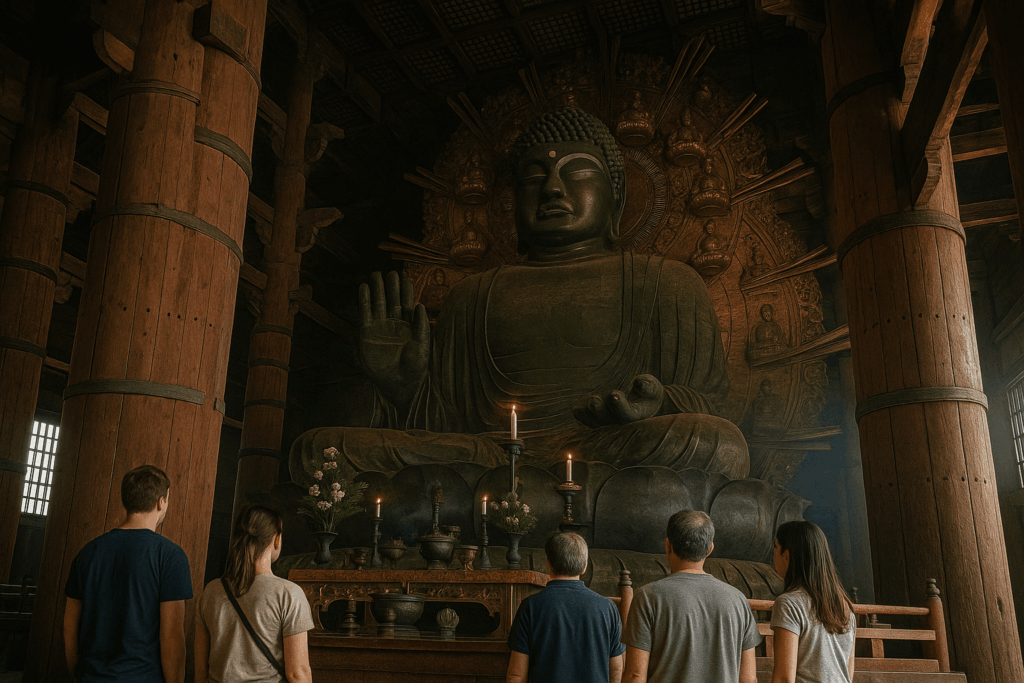
2. Todaiji Temple & the Great Buddha — Nara’s Iconic Landmark
Todaiji is Nara’s most famous temple and home to the Daibutsu, one of the largest bronze Buddha statues in the world, housed inside the massive Great Buddha Hall (Daibutsuden). The hall itself is one of the largest wooden buildings on earth and feels overwhelming as you walk inside and look up at the Buddha’s serene face. Temple grounds also include gates, sub-temples, and viewpoints like Nigatsudo, which offers a beautiful view across Nara Park.
Entrance Fee (Great Buddha Hall): Around ¥600 (extra fees for combined areas)
Recommended Time: 1–1.5 hours for main hall + surrounding grounds
Nearby Spots: Nara Park lawns, Nigatsudo Hall, Nara National Museum, Isuien Garden
Highlights: Great Buddha statue, giant wooden pillars, model displays of ancient Nara
Tip: Visit earlier in the day to avoid large tour crowds
3. Kasuga Taisha Shrine — Lanterns in a Sacred Forest
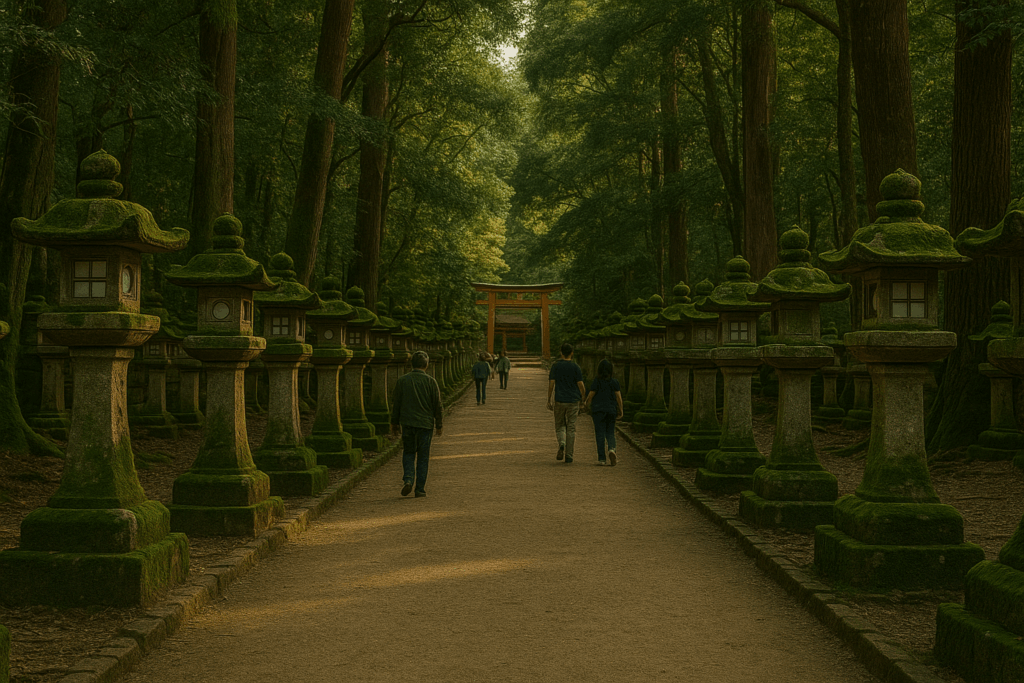
Located at the eastern edge of Nara Park, Kasuga Taisha is Nara’s most important Shinto shrine, famous for its thousands of stone lanterns lining the forest paths and hundreds of bronze lanterns hanging around the inner buildings. Founded in the 8th century, the shrine is surrounded by the Kasugayama Primeval Forest, a protected ancient woodland that adds to the spiritual atmosphere. During special lantern festivals, many of the lanterns are lit, creating a magical scene.
• Entrance Fees:
- Outer grounds: Free
- Inner area / treasure hall: Around ¥500–¥600
• Must See: Long stone-lantern approach, vermilion shrine buildings, bronze lantern corridors
• Nearby Spots: Nara Park forest paths, Mount Wakakusa trail, botanical garden
• Best Time: Morning for peace, or festival days for lantern illuminations
4. Kofukuji Temple & Sarusawa Pond — Historic Pagoda Views
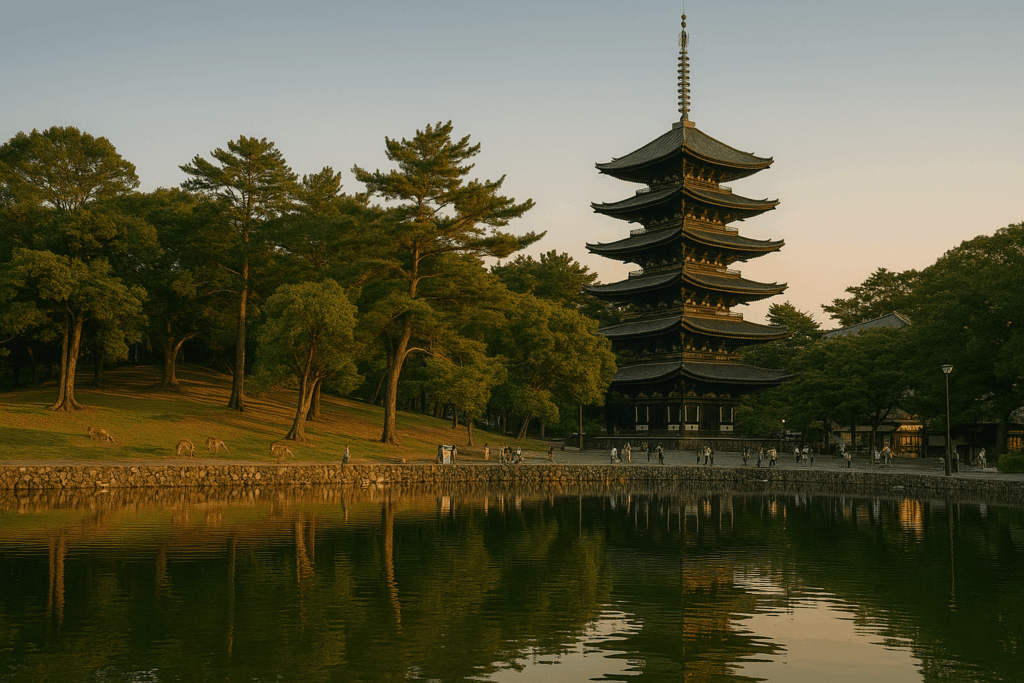
Kofukuji was once one of the most powerful temples in Japan and still dominates the area near Kintetsu Nara Station with its elegant five-story pagoda, one of the tallest in the country. The temple complex includes halls, a three-story pagoda, and a museum with important Buddhist art. Nearby, Sarusawa Pond reflects temple rooftops and willow trees, creating a beautiful scene—especially at sunset when the water glows.
• Approx Cost: Temple grounds partly free; museum and special halls have small fees
• Must See: Five-story pagoda, Eastern Golden Hall, National Treasure Museum
• Nearby Spots: Nara Park, Higashimuki Shopping Street, Naramachi
• Best Time: Late afternoon or early evening for reflections in Sarusawa Pond
5. Naramachi — Traditional Merchant Quarter
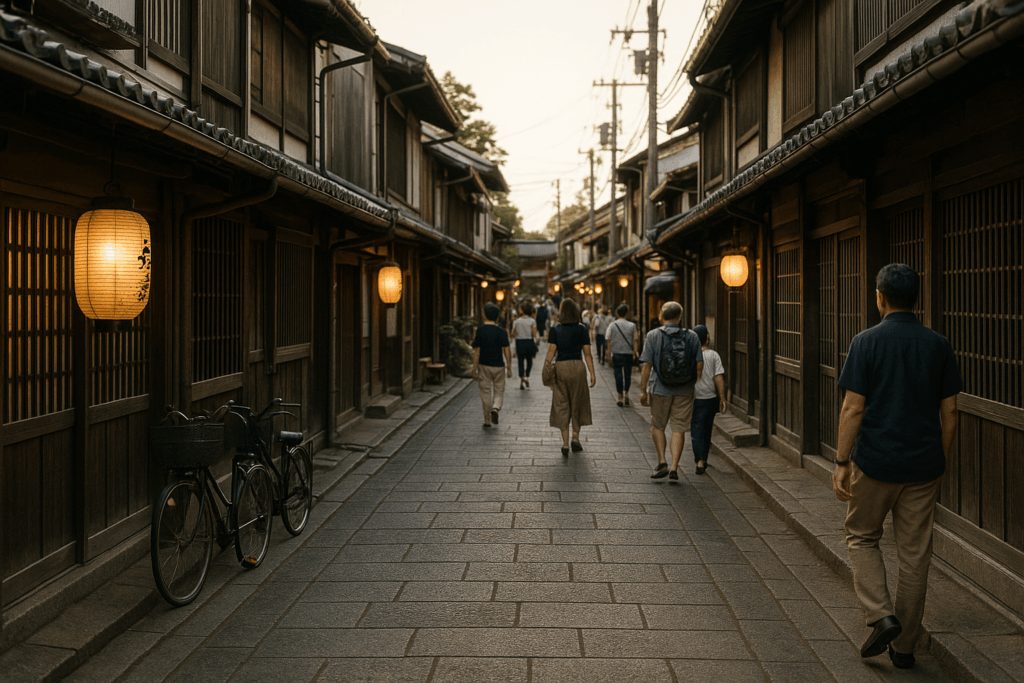
Naramachi is Nara’s old merchant district, a network of narrow streets filled with preserved wooden townhouses (machiya), craft shops, small museums, cafés, and local restaurants. Many buildings retain traditional layouts, and some are open to the public as free-entry houses where you can step inside and see how merchants once lived. It’s a great area to wander, shop for souvenirs, enjoy matcha and sweets, and feel daily life away from the main temple crowds.
• Approx Cost: Free to walk around; some house museums are free or very cheap
• Must See: Old merchant houses, small shrines, local handicraft shops
• Nearby Spots: Sarusawa Pond, Higashimuki Shopping Street, Nara Park (short walk)
• Best Time: Afternoon until early evening for cafés and shops
6. Isuien & Yoshikien Gardens — Classic Japanese Garden Scenery
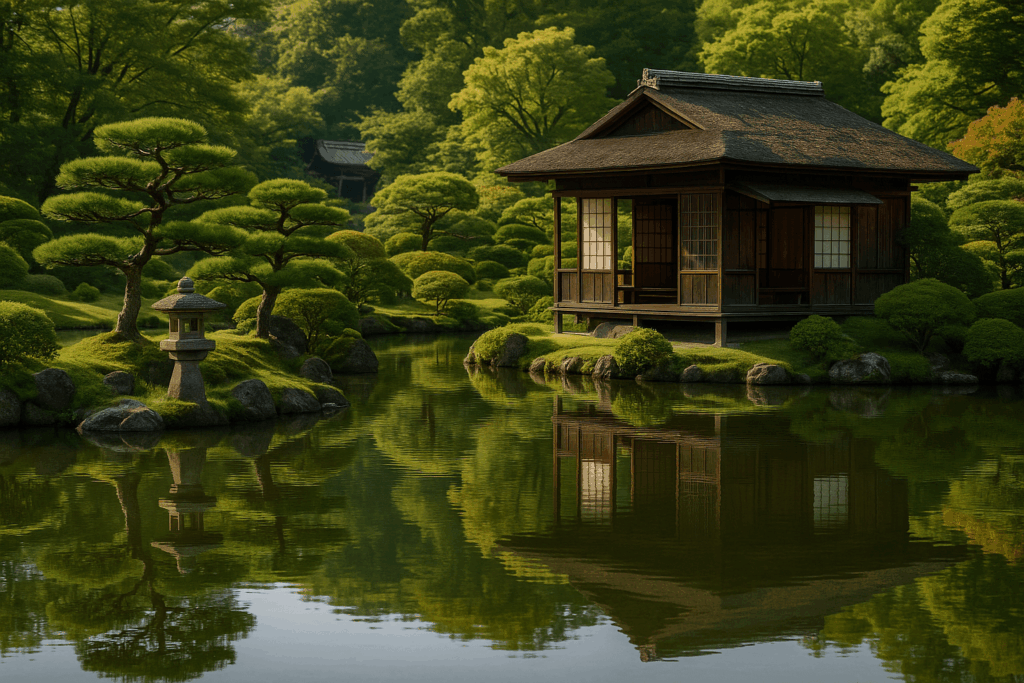
Just west of Todaiji, Isuien Garden and neighboring Yoshikien Garden offer peaceful, landscaped spaces featuring ponds, stepping-stone paths, tea houses, and carefully arranged trees and rocks. Isuien is known for its “borrowed scenery,” framing Todaiji’s Nandaimon Gate and surrounding hills as part of the view, while Yoshikien includes moss, pond, and tea ceremony gardens. Together, they are perfect for quiet walks and photography.
• Entrance Fee:
- Isuien: Around ¥1,200 (includes small museum)
- Yoshikien: Often free for foreign tourists (confirm locally)
• Recommended Time: 45–90 minutes for both gardens
• Nearby Spots: Todaiji, Nara National Museum, Nara Park
• Best Season: Spring for fresh greenery and blossoms, autumn for fall colors
7. Mount Wakakusa — Gentle Hike & City View
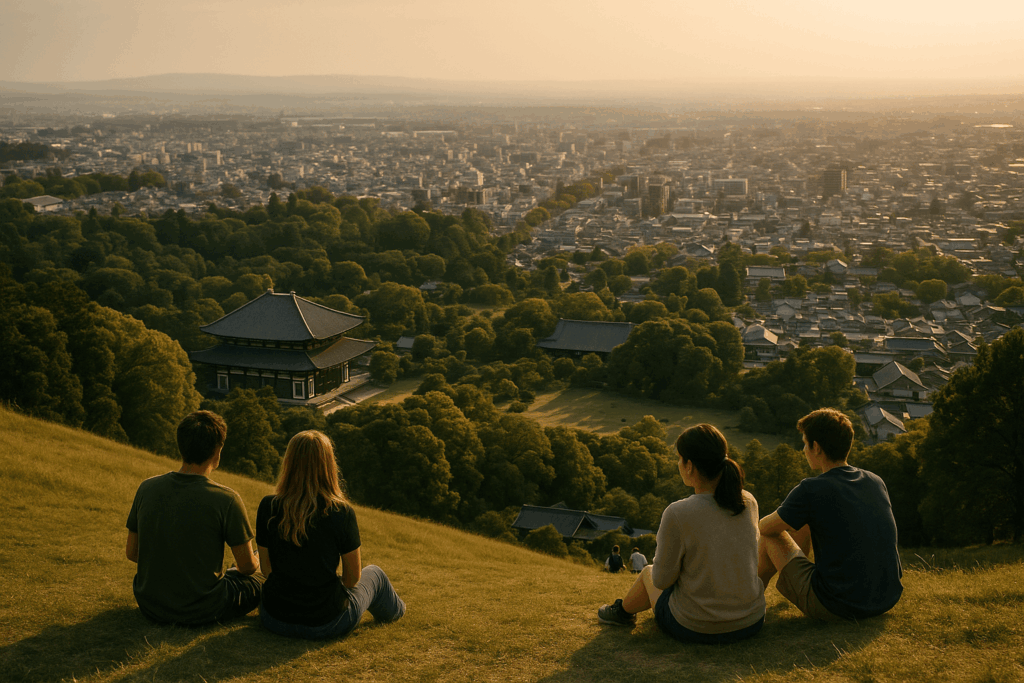
Mount Wakakusa (Wakakusayama) is a low, grassy hill behind Nara Park that offers a relaxed hike and a wide view over Nara city and its temples. You can reach the base from Kasuga Taisha or along forest paths, then climb up a fairly steep but short trail. In late January, a special event called Wakakusa Yamayaki sees the hillside set ablaze in a controlled fire festival, followed by fireworks (very crowded but spectacular if your timing matches).
• Entrance Fee to Climb (when gate is in operation): Small fee (around ¥150–¥200)
• Hiking Time: About 30–45 minutes up at an easy pace
• Best Time: Afternoon on clear days for good visibility; sunset for romantic views
• Nearby Spots: Kasuga Taisha, Nara Park walking trails
8. Nara National Museum — Buddhist Art & History
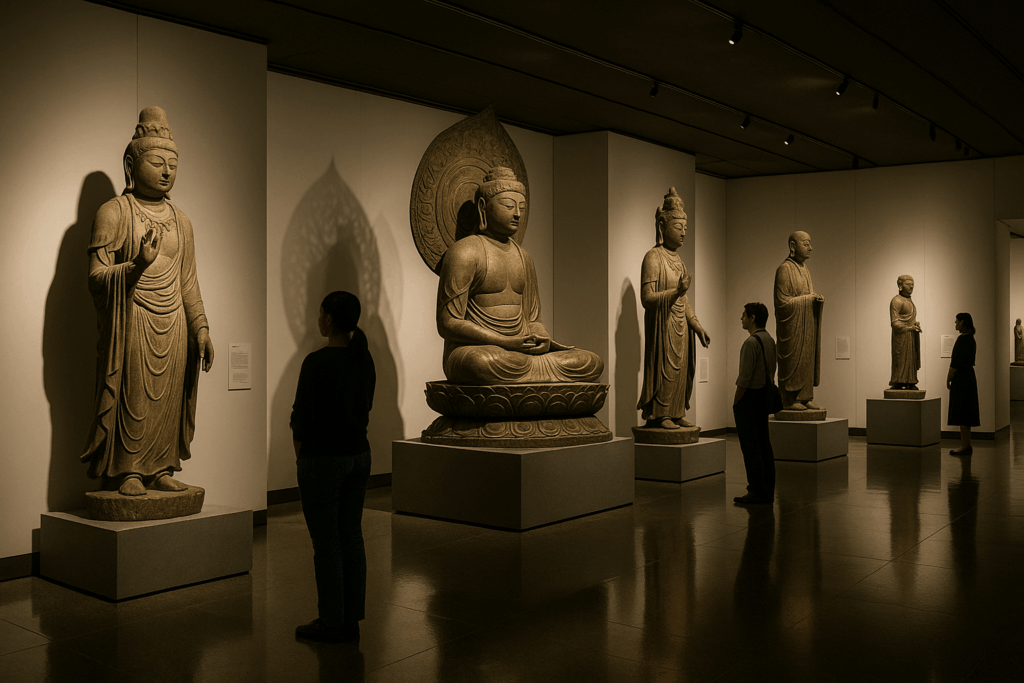
Located in Nara Park, the Nara National Museum focuses on Buddhist art, displaying statues, scrolls, ritual objects, and archaeological finds from Nara and surrounding regions. It’s especially known for its annual Shosoin Treasures Exhibition (limited period) and for helping visitors understand the spiritual and artistic background of the temples they are visiting.
• Entrance Fee: Around ¥700–¥1,000 depending on exhibits
• Recommended Time: 1–1.5 hours
• Nearby Spots: Todaiji, Isuien, Nara Park lawns, Kofukuji
• Best For: History and art lovers, rainy-day alternative to outdoor sights
9. Horyuji Temple — World’s Oldest Wooden Buildings
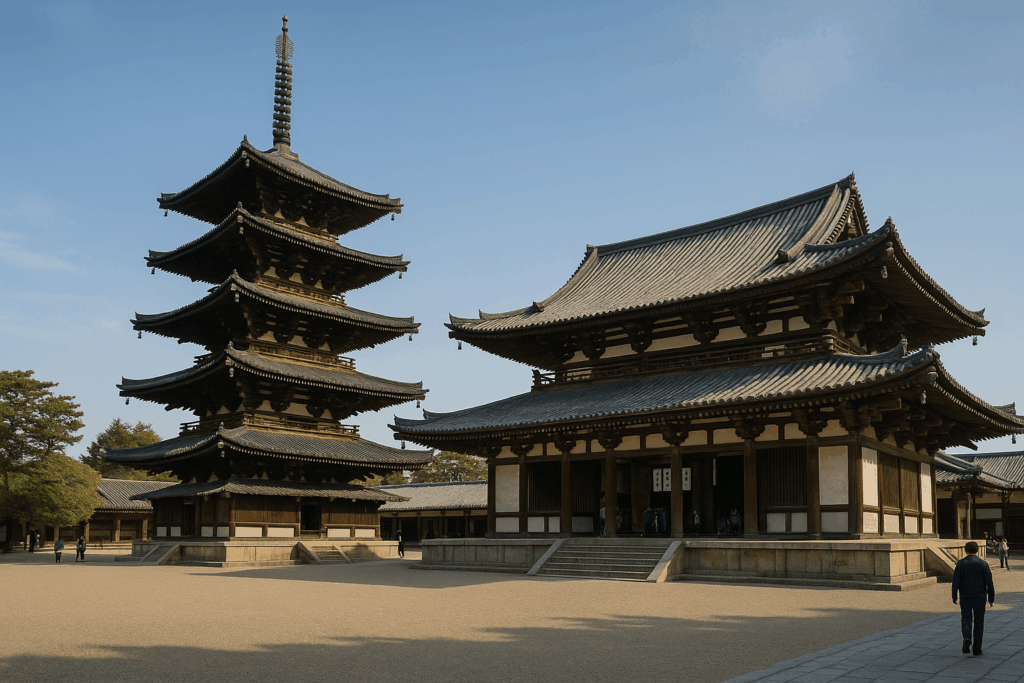
Located a short train/bus ride outside central Nara, Horyuji Temple is a UNESCO World Heritage Site and home to some of the oldest wooden buildings in the world, dating back to the early 7th century. The temple complex includes pagodas, halls, and a treasure house with important Buddhist art. It’s quieter than central Nara and offers a powerful sense of deep history.
• Entrance Fee: Around ¥1,500 for full access (western & eastern precincts + museum)
• Access: JR or Kintetsu to Horyuji area + bus/walk (about 20 minutes from station)
• Recommended Time: 2–3 hours including travel
• Best For: Serious history/architecture fans, those spending more than just a half-day in Nara
10. Higashimuki Shopping Street & Sanjo-dori — Food & Souvenirs
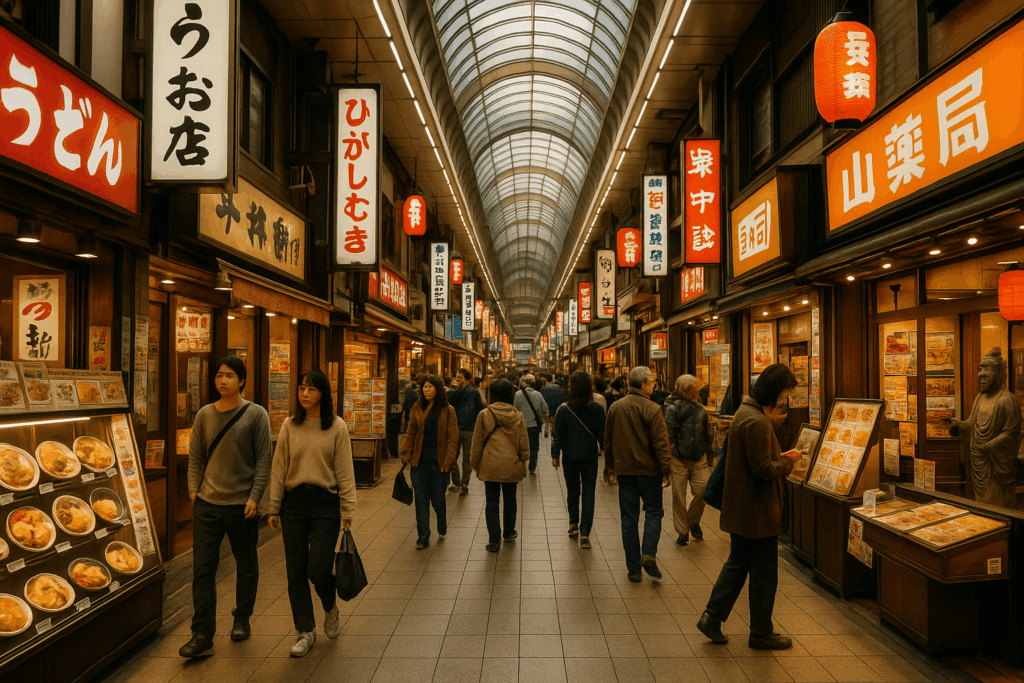
Right outside Kintetsu Nara Station, Higashimuki Shopping Street is a covered arcade filled with restaurants, souvenir shops, dessert stalls, and small clothing stores. It connects easily to nearby streets like Mochiidono and Sanjo-dori, making this whole area a lively spot to grab meals, snacks, and local specialties before or after visiting Nara Park. It’s also very convenient during rain thanks to the roofed arcade.
• Approx Cost: Free to explore; food and shopping vary
• Must Try: Local sweets, small izakayas, souvenir shops with deer-themed goods
• Nearby Spots: Kofukuji, Nara Park, Naramachi, Sarusawa Pond
• Best Time: Late afternoon and evening when restaurants are open and lights are on
How to Travel Around Nara Efficiently
Nara is compact and easy to explore, especially around Nara Park. The main decisions are: JR vs Kintetsu trains to get there and whether to use city buses or walk. Once you know how the stations and park connect, getting around is simple.
Getting to Nara
From Osaka:
• JR Osaka Station → JR Nara Station: About 50–60 minutes, ~¥820 on Yamatoji Rapid (covered by JR Pass).
• Kintetsu Osaka-Namba → Kintetsu Nara Station: About 40 minutes by Kintetsu Limited Express or rapid express; fares vary (~¥570–¥1,100 depending on train).
From Kyoto:
• JR Kyoto Station → JR Nara Station: Miyakoji Rapid, about 45 minutes, around ¥720.
• Kintetsu Kyoto → Kintetsu Nara: ~35–45 minutes by Limited Express or Express; fares vary (~¥640–¥1,300).
• Kintetsu Nara Station is closer to Nara Park and main sights than JR Nara Station, which is about a 20-minute walk or a short bus ride away.
Moving Around Inside Nara
On Foot:
• Most visitors explore on foot—Kintetsu Nara → Nara Park → Todaiji → Kasuga Taisha → back through Kofukuji and shopping streets is very walkable.
Nara Kotsu Buses:
• Nara Kotsu operates buses linking JR Nara Station, Kintetsu Nara Station, Nara Park, Naramachi, Nishinokyo (Yakushiji, Toshodaiji), and beyond. Bus stops and maps are clearly marked.
Nara Bus Passes:
• Nara 1-Day Pass (Central / Park Area): Around ¥500–¥600 for adults; unlimited rides on designated routes around Nara Park, Naramachi, Nishinokyo, etc.
• Nara 1-Day Pass Wide: Around ¥1,100 for adults; covers a wider area including Horyuji and more, plus some discount benefits.
These passes are ideal if you plan to visit Nishinokyo (Yakushiji, Toshodaiji), Heijo Palace, or Horyuji in a single day.
Approximate Transportation Costs
• Single Bus Ride (City Area): Around ¥220–¥300.
• 1-Day Bus Pass (Central): ~¥500–¥600
• 1-Day Bus Pass Wide: ~¥1,100
• JR/Private Train to Horyuji Area: Around ¥220–¥450 one way depending on line and distance.
Essential Travel Tips
• Choose Your Station Wisely: If you’re mostly doing Nara Park in one day, Kintetsu Nara is more convenient. JR Nara is better if you rely heavily on JR Pass or continue to other JR destinations later.
• Combine Walking & Buses: Walk around Nara Park, use buses for outer temples (Nishinokyo, Horyuji).
• Get Bus Pass at Station: Look for the Nara Kotsu or tourist information counters at JR or Kintetsu stations for passes.
• Avoid Midday Heat in Summer: Plan shaded temple visits or museum time during the hottest hours.
• IC Cards Work: Suica, Pasmo, ICOCA etc. generally work on most buses and trains in Nara.
Food & Restaurant Suggestions in Nara
Nara’s food culture is more traditional and regional rather than ultra-modern or international. You’ll find comforting local dishes, old-fashioned sweets, and specialties developed from its history as an ancient capital and agricultural region.
Must-Try Nara Specialties
Kakinoha-zushi (Persimmon Leaf Sushi):
Pressed sushi (often mackerel or salmon) wrapped in persimmon leaves, originally a way to preserve fish. Now a famous Nara specialty and popular station bento.
Chagayu (Tea Porridge):
Simple rice porridge cooked in tea instead of plain water—an old Nara temple and home dish that pairs well with side dishes.
Asuka Nabe:
Hot pot made with chicken and vegetables simmered in a milk-based broth, a distinctive local dish from the Nara region.
Miwa Somen:
Thin wheat noodles from nearby Miwa, often served chilled in summer or in hot broth in winter.
Narazuke:
Strongly flavored pickles made using sake lees (the by-product of sake brewing), often served with rice or as side dishes.
Yomogi Mochi / Manju / Kuzumochi:
Traditional sweets including rice cakes flavored with mugwort (yomogi), steamed buns, and jelly-like sweets made from kudzu starch—great with matcha.
Budget-Friendly Restaurants (¥500–¥1,500 per meal)
• Station & Arcade Eateries (around Kintetsu Nara / Higashimuki):
Simple noodle shops, curry rice, dons (rice bowls), and set meals.
• Small Local Cafés and Teishoku Restaurants:
Fixed set meals (teishoku) with rice, miso soup, fish or meat, and pickles in the ¥800–¥1,200 range.
• Convenience Stores:
Great for quick breakfast or picnic-style lunch—onigiri, bread, salads, drinks—especially if you want to eat in Nara Park.
• Casual Noodles (Soba / Udon / Somen):
Many small shops around the stations and Naramachi serve bowls of noodles around ¥700–¥1,000.
Vegetarian & Vegan Options
Nara can be easier for vegetarians than some places thanks to its temple culture—but you still need to check for fish-based broths.
• Shojin Ryori (Temple Cuisine):
Some temples or temple-affiliated restaurants (often by reservation) offer beautifully presented vegetarian meals.
• Cafés in Naramachi & Near Stations:
Salad bowls, pasta, pizza, and vegetable-based dishes are available in some modern cafés.
• Sweets & Snacks:
Many traditional sweets—mochi, manju, kuzumochi—are naturally meat-free (though not always vegan).
• Convenience Stores / Supermarkets:
Onigiri with ume or kombu, salads, plain bread, fruit, and nuts help fill any gaps.
If you’re strict vegetarian/vegan, it helps to learn a few Japanese phrases or carry a card explaining dietary needs.
Approximate Budget for a Day in Nara
Nara is generally cheaper than Kyoto or Tokyo and can be explored comfortably even on a small budget, especially if you focus on free outdoor sights and limit paid attractions. Here’s a realistic breakdown (excluding hotel accommodation).
Daily Budget Breakdown
Food & Dining: ¥1,500–¥5,000
• Breakfast: ¥400–¥800 (convenience store, bakery, or café)
• Lunch: ¥700–¥1,800 (noodles, teishoku, kakinoha-zushi set, or simple set meal)
• Dinner: ¥1,000–¥3,000 (casual restaurant, izakaya, local specialties)
• Snacks & Sweets: ¥300–¥1,000 (deer crackers, mochi, drinks, ice cream)
Transportation (Within Nara): ¥0–¥1,500
• If mostly walking from Kintetsu Nara: ¥0 once you arrive
• A few bus rides: ¥220–¥300 per ride
• 1-Day Bus Pass: Around ¥500–¥600 (central area) or ¥1,100 (wide area)
(Note: Train fare to/from Nara from Osaka or Kyoto is extra and depends on your base city and passes.)
Attractions & Activities: ¥0–¥3,500+
• Nara Park, Kofukuji grounds, Naramachi streets, Sarusawa Pond: Free
• Todaiji (Great Buddha): ~¥600
• Kasuga Taisha inner area: ~¥500–¥600
• Isuien + Yoshikien: ~¥1,200 (Isuien) and often free (Yoshikien)
• Nara National Museum: ~¥700–¥1,000
• Horyuji: ~¥1,500
Shopping & Souvenirs: ¥500–¥8,000+
• Small snacks and souvenirs: ¥500–¥2,000
• Traditional crafts, deer-themed goods, nicer gifts: ¥3,000–¥8,000+
Entertainment & Nightlife: ¥0–¥3,000
Nara is quiet at night; you’re more likely to spend on a relaxed dinner and maybe dessert than bars or clubs.
Money-Saving Tips
• Walk the Park Loop: From Kintetsu Nara → Kofukuji → Nara Park → Todaiji → Kasuga Taisha → back via Naramachi can all be done on foot, saving transport money.
• Use a Bus Pass for Outer Temples: If you plan Horyuji, Yakushiji, Toshodaiji, or Heijo Palace in one day, the Nara 1-Day Pass or Nara 1-Day Pass Wide quickly pays off.
• Lunch Specials: Look for lunch sets instead of dinner at certain restaurants to try local dishes at lower prices.
• Convenience Store Breakfasts: Cheap and good—use savings for a nicer lunch or specialty dinner.
• Limit Paid Attractions: Nara has many free areas; if on a tight budget, choose just a few paid spots (e.g., Todaiji + one garden + one temple).
• Bring a Reusable Bottle: Many parks and stations have vending machines and sometimes fountains—refilling saves small but repeated costs.
Nara offers huge cultural depth in a compact, calm package—a perfect contrast to big-city Japan. Whether you visit as a day trip from Osaka/Kyoto or stay overnight to enjoy quiet evenings in Naramachi and around the park, Nara will leave you with a strong sense of Japan’s ancient heart: temples in the trees, deer on the grass, and history in every stone path.
If you want, next I can do the same full-size format for Kyoto, Nagoya, or Hiroshima, or help you turn all your “Osaka–Kobe–Nara–Yokohama” pages into a multi-city Kansai itinerary section for your Journey Japan site.