
How Japan's Public Transport Works: Trains, Shinkansen, IC Cards & Passes Explained
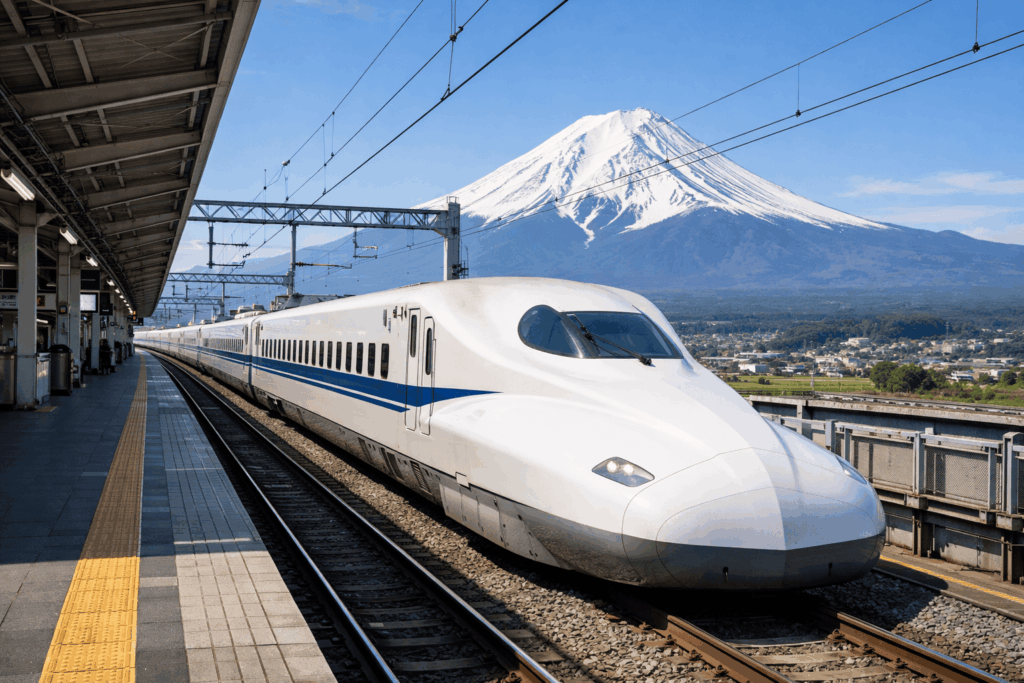
Japan's public transportation system is legendary worldwide – and for good reason. It's punctual to the second, impeccably clean, remarkably efficient, and connects even the most remote corners of the country. For first-time visitors, however, the sheer complexity of navigating Japan's rail network can feel overwhelming. Multiple train companies, color-coded lines, various pass options, and ticket machines entirely in Japanese – it's enough to make anyone nervous.
But here's the truth: once you understand the basics, Japan's public transport becomes one of the most enjoyable aspects of traveling through the country. This comprehensive guide breaks down everything you need to know about trains, the famous Shinkansen bullet trains, IC cards, and rail passes, so you can navigate Japan's transportation network with confidence and ease.
Understanding Japan's Rail System: More Complex Than It Looks
Multiple Companies, One Seamless Network
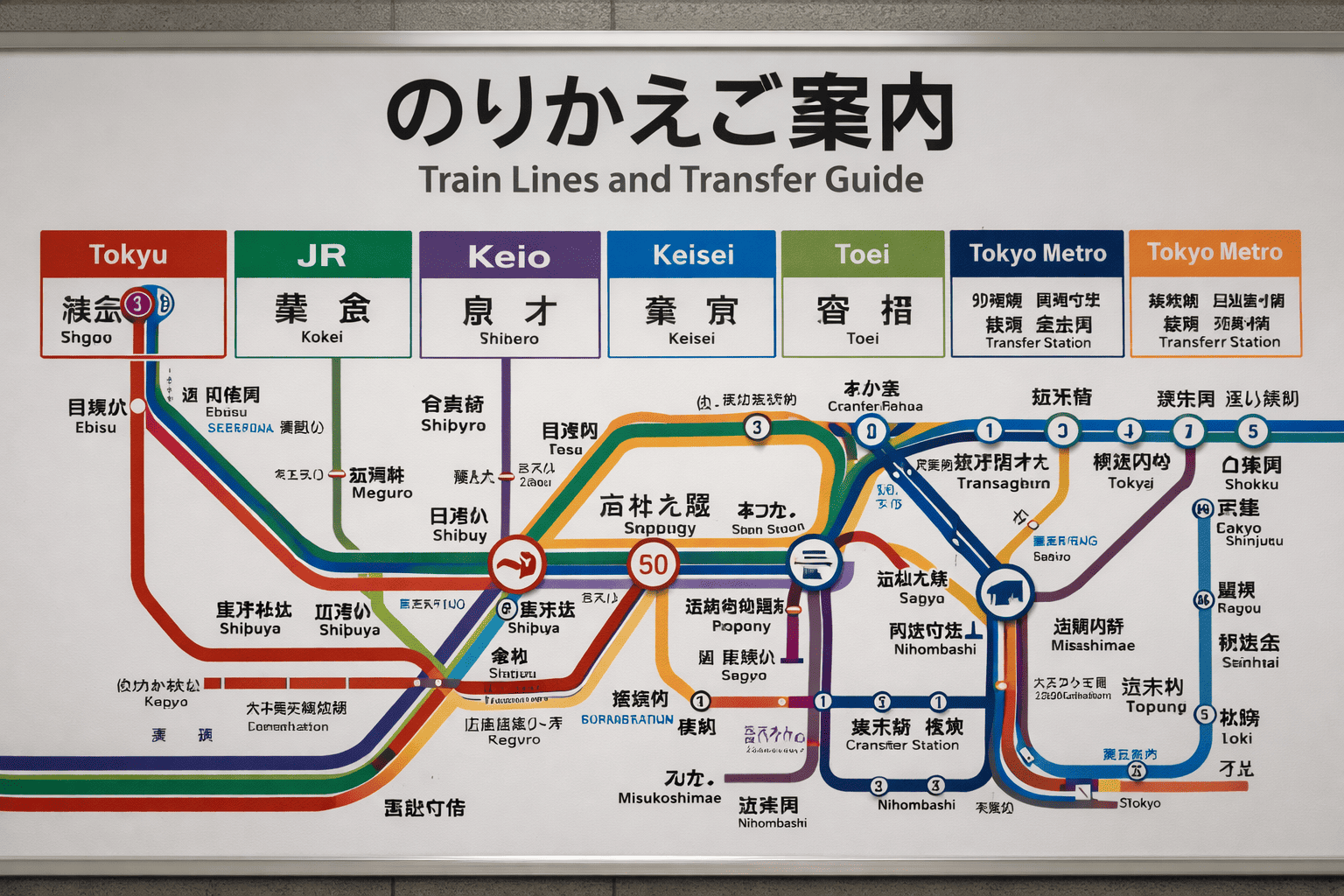
Unlike many countries with centralized rail systems, Japan's trains are operated by multiple companies. The Japan Railways (JR) Group is the largest, operating nationwide with regional divisions like JR East, JR West, and JR Central. However, major cities also have private railway companies – Tokyo alone has lines operated by Tokyo Metro, Toei Subway, and several private operators like Keio, Odakyu, and Tokyu.
This multi-company structure matters because tickets and passes for one company don't automatically work for another. A JR Pass won't cover Tokyo Metro lines, and a Tokyo Metro day pass won't work on JR lines. Understanding which company operates your route helps you choose the right ticket or pass and avoid confusion at ticket gates.
Types of Trains You'll Encounter
Japan categorizes trains by speed and number of stops. Local trains (kakueki teisha) stop at every station and are the slowest but cheapest option. Rapid trains (kaisoku) skip some smaller stations, saving time without extra cost. Express trains (kyuuko) and Limited Express trains (tokkyuu) are faster still, though Limited Express trains require reserved seats and additional fees beyond the basic fare.
The Shinkansen, Japan's bullet train, operates as a completely separate system from regular trains, with dedicated tracks and platforms. Don't expect to board a Shinkansen from a regular JR platform – they're accessed through separate entrances and gates within major stations.
The Shinkansen: Japan's Pride and Joy
Why the Bullet Train Is Special
The Shinkansen isn't just fast – it's a marvel of engineering and operational excellence. Since operations began in 1964, these bullet trains have maintained an astonishing safety record with zero passenger fatalities from accidents. They're also famously punctual, with average delays measured in seconds, not minutes.
Several Shinkansen lines crisscross Japan. The Tokaido Shinkansen connects Tokyo to Osaka via Kyoto and Nagoya – the busiest and most popular route. The Sanyo Shinkansen extends further west to Hiroshima and Fukuoka. The Tohoku Shinkansen heads north from Tokyo toward Sendai and Aomori. Each line has different train types: Nozomi (fastest), Hikari (semi-fast), and Kodama (all-station) on the Tokaido/Sanyo lines, for example.
Booking and Riding the Shinkansen
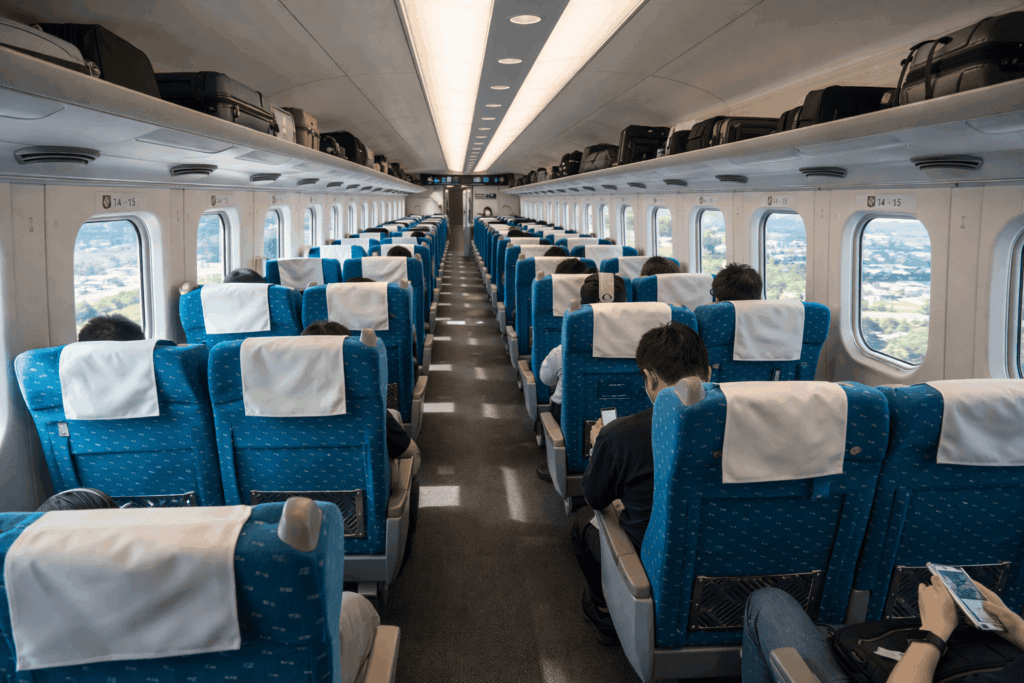
Shinkansen tickets consist of two parts: a basic fare ticket and a limited express supplement. Most seats are reserved (shitei-seki), though unreserved cars (jiyuu-seki) exist on most trains. Unreserved tickets are cheaper but don't guarantee seats, especially during peak travel periods like Golden Week or New Year.
Reserved seats can be booked up to one month in advance at ticket counters, machines, or online. Green Car seats offer more space and comfort at premium prices. When your Shinkansen arrives – precisely on time – you'll have about one minute to board before departure. Car numbers and platform positions are clearly marked, making boarding straightforward despite the quick turnaround.
The Shinkansen experience itself is remarkably smooth. Even at speeds exceeding 300 km/h, you barely feel movement. Seats recline generously, bathrooms are spotless, and cleaning crews perform complete train turnarounds in just seven minutes at terminal stations.
IC Cards: Your Key to Effortless Transit
What Are IC Cards and Why You Need One
IC cards are rechargeable smart cards that make navigating Japan's public transport infinitely easier. Simply tap your card on the reader when entering and exiting stations, and the correct fare is automatically deducted. No more struggling with ticket machines or calculating fares – IC cards handle it seamlessly.
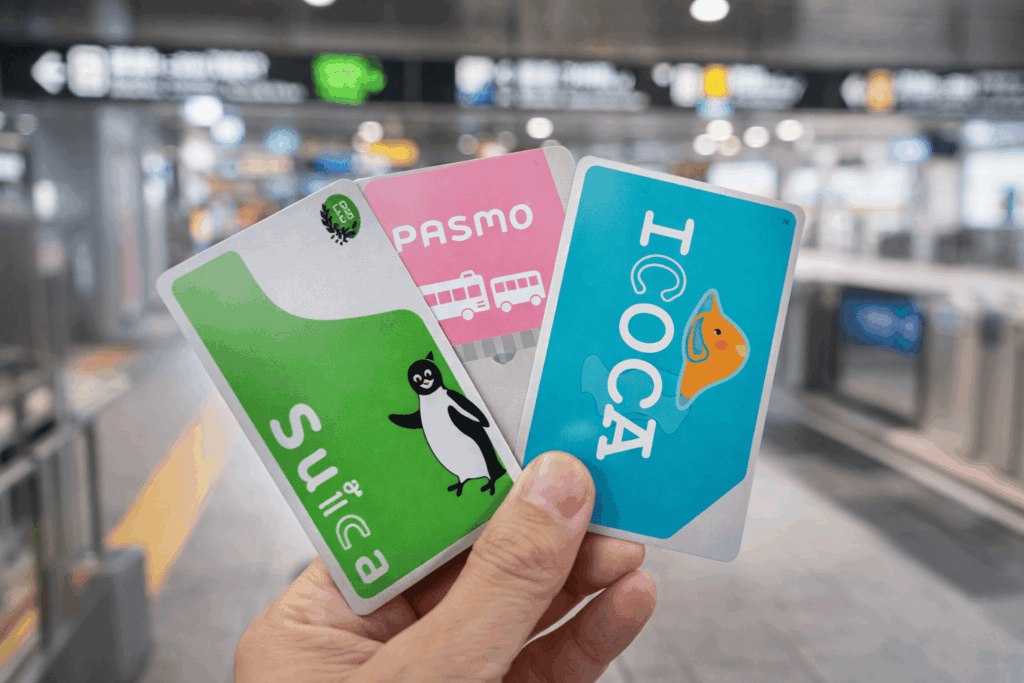
The two most common cards are Suica (JR East) and Pasmo (Tokyo-area private railways), but they're interoperable nationwide. Osaka's Icoca, Kyoto's Icoca, Fukuoka's Nimoca, and other regional cards all work across Japan's major cities. Purchase an IC card at any major station ticket machine for a ¥500 deposit (refundable when you return the card).
Beyond Trains: IC Card Versatility
IC cards work on virtually all trains, subways, and buses throughout Japan. But their usefulness extends far beyond transportation. Use them at convenience stores, vending machines, coin lockers, and even some restaurants. Many visitors find IC cards so convenient they barely use cash for small purchases.
Loading money onto IC cards is simple – use any ticket machine or convenience store. Cards can hold up to ¥20,000. If your balance runs low, you can recharge at any station, even mid-journey, before exiting the gates. The flexibility and convenience of IC cards cannot be overstated – they're essential for any Japan trip.
Rail Passes: Are They Worth It?
The Famous JR Pass Explained
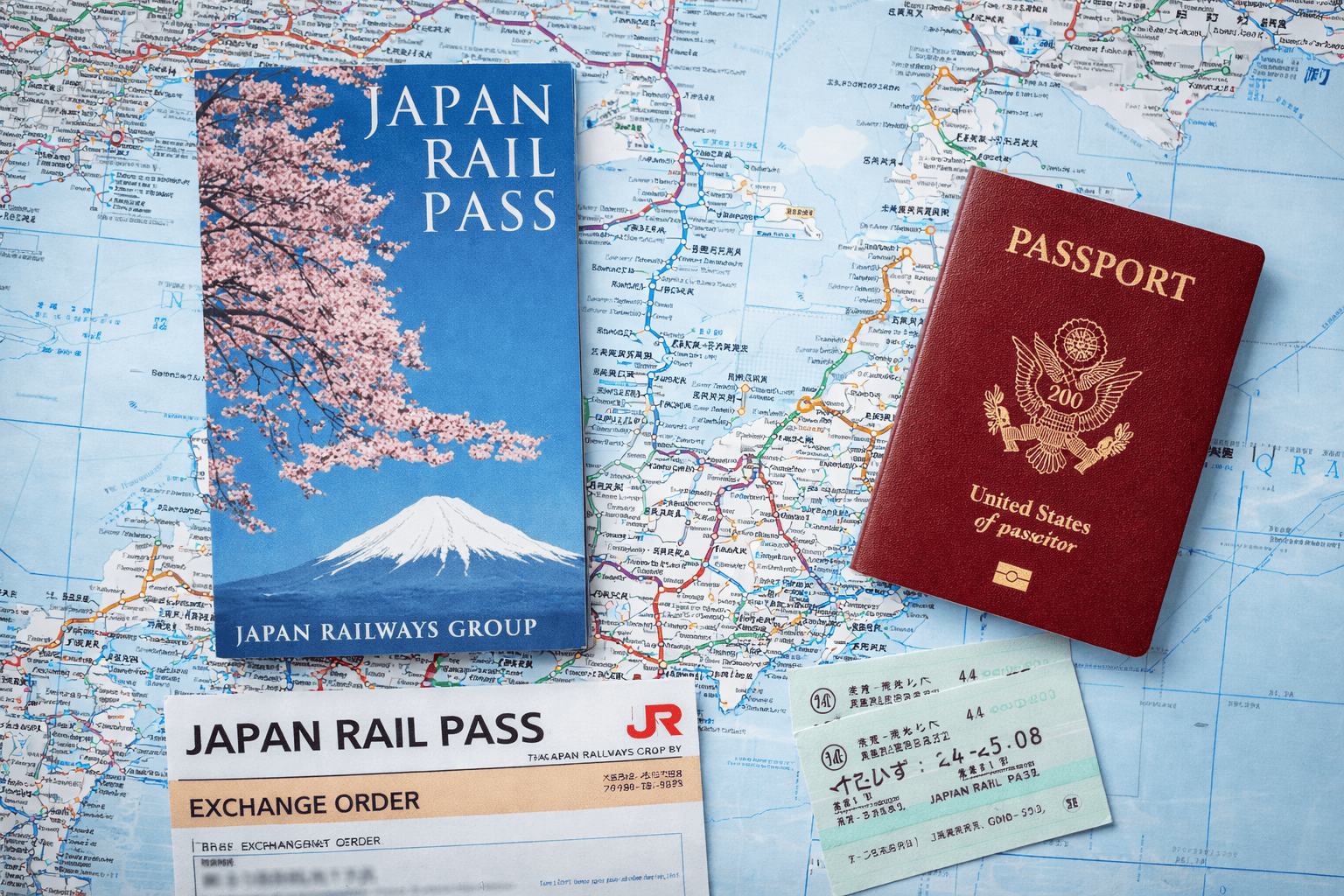
The Japan Rail Pass is perhaps the most well-known rail pass, offering unlimited travel on JR trains nationwide, including most Shinkansen lines (excluding the fastest Nozomi and Mizuho trains). Passes come in 7-day, 14-day, and 21-day versions, available in ordinary or Green Car (first class) classes.
The economics are straightforward: a 7-day ordinary JR Pass costs roughly the same as a round-trip Tokyo-Kyoto Shinkansen ticket. If you're planning multiple long-distance trips within a week, the pass saves money. If you're staying mostly in one city or region, it probably doesn't make financial sense.
Regional and Alternative Passes
Beyond the nationwide JR Pass, numerous regional passes offer better value for specific itineraries. The JR East Pass covers Tokyo and northern Honshu. The Kansai Area Pass works for Osaka, Kyoto, Nara, and Kobe. The Takayama-Hokuriku Pass connects popular Alpine route destinations. Each serves different travel patterns and can be more economical than the full JR Pass.
Major cities also offer subway day passes – Tokyo Metro's 24-hour ticket, Osaka's Enjoy Eco Card, and Kyoto's bus/subway passes. These work well for intensive city exploration but require calculation to ensure they're cheaper than using an IC card for individual trips.
Practical Tips for Navigating Japan's Trains
Reading Station Signs and Finding Your Platform
Japanese stations display information in Japanese and English, with some adding Chinese and Korean in tourist areas. Each train line has a distinctive color and alphanumeric code – the Yamanote Line in Tokyo is green and coded JY, for example. Stations are numbered sequentially, so Shibuya is JY20, making navigation easier even with minimal Japanese.
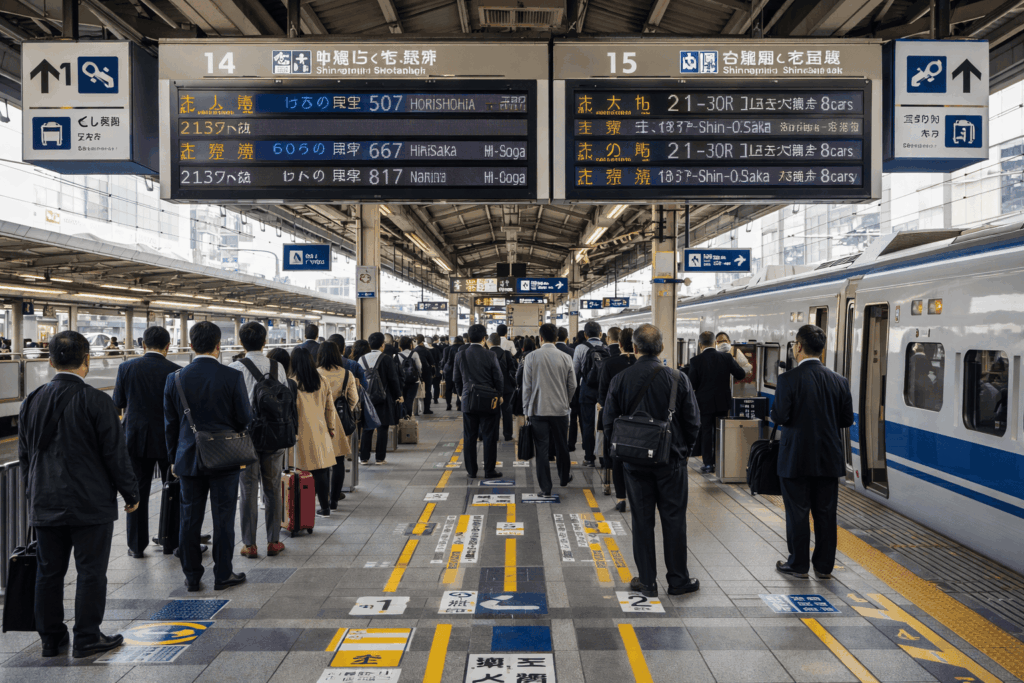
Platform signs clearly indicate which trains stop there, their destinations, and departure times. Electronic displays update in real-time, showing the next several trains. Most major stations have staff offices or information desks where English assistance is available.
Train Etiquette: Riding Like a Local
Japanese trains operate under strict but simple etiquette rules. Queue orderly at designated platform markings and wait for passengers to exit before boarding. Once aboard, keep conversations quiet – phone calls are prohibited, and phones should be on silent mode. Priority seating near doors is reserved for elderly, pregnant, or disabled passengers.
Remove backpacks and hold them at your feet on crowded trains to conserve space. Eating and drinking are discouraged on local trains, though acceptable on long-distance trains and the Shinkansen. If you're lost or confused, station staff are remarkably helpful despite language barriers – they'll use maps, gestures, and translation tools to assist you.
Making Public Transport Work for Your Journey
Japan's public transportation system is a testament to precision, efficiency, and consideration for passengers. What initially seems complex becomes intuitive after your first few rides. The combination of IC cards for flexibility, rail passes for long-distance travel, and the reliable Shinkansen for intercity connections creates a transportation network that's genuinely a pleasure to use.
The key is starting with the basics: get an IC card immediately upon arrival, understand which rail company operates your routes, and plan whether a rail pass makes economic sense for your itinerary. With these foundations in place, you'll navigate Japan's trains with the confidence of a seasoned traveler, opening up the entire country for exploration.